Back to Business: Winning Guests as Summer Ends and Student Season Begins

Written by Natalie Millington

25th August 2026

As summer draws to a close, hospitality operators are entering one of the most important transition periods of the year. Families return to their routines, schools reopen, university students arrive in new cities, and consumer habits begin to shift from sunny beer gardens and spontaneous visits to planned social occasions and value-conscious spending.

For pubs, bars, restaurants, and quick-service venues, this seasonal change presents a valuable opportunity to reconnect with existing guests, attract new audiences, and build loyalty ahead of the busy autumn and festive trading periods.

The question is: how can businesses make the most of it?

Understanding the Autumn Consumer Mindset

The transition from summer to autumn often brings a change in customer priorities. Consumers become more budget-conscious, routines become more structured, and guests are increasingly looking for value-driven experiences that fit around work, education, and family commitments.

At the same time, research from Zonal highlights that loyalty, personalisation, and customer experience remain key factors influencing where guests choose to spend their money. In a challenging economic environment, brands that consistently deliver relevant offers and rewarding experiences are more likely to retain customers and increase visit frequency.

For operators, this means moving beyond blanket discounts and focusing on targeted engagement strategies that appeal to distinct customer groups.

Capitalising on Freshers and Student Arrivals

September marks the arrival of thousands of students into towns and cities across the UK. Freshers represent more than just a short-term sales opportunity. They are potential long-term customers who may spend several years living, studying, and socialising within your catchment area.

To attract this audience:

Create Student-Friendly Promotions
Students are actively seeking value as they settle into university life. Consider:

  • Exclusive student discounts
  • Meal-and-drink bundle offers
  • Midweek promotions
  • Welcome-week incentives
  • Group dining packages

Using Zonal’s Promotions functionality, businesses can create targeted offers that encourage trial visits while protecting margins.

From the Customer Success team at Zonal:

“Multiple tiers could be set up to target specific societies within a university. By having unique rewards for a society, they can help build a great affiliation. This could help target specific days when they train and in return help drive trade for quieter periods – typically midweek.

An attractive sign-up offer can really go a long way to a successful launch of a loyalty program. This can either be a free item for registration or additional currency/ points. Points and Currency rewards can be delayed to the following day after sign-up. As well as delaying the reward, an expiry can be set. This helps target return footfall and spend in a short period.

A ‘points for spend’ would be a fantastic way to encourage spending in the venue. These points could be then exchanged for items or converted into currency to spend across the venue. This would give the students something tangible to aim for. Double points can be offered at specific times to drive sales in quieter times. Double point offers could also be applied to specific sites at specific times. For example, food venues on a Tuesday evening could be made available when the venue might usually be quieter.

Due to the very nature of the sales being very term time led, this can lead to items (specifically food) perishing and lead to food waste. If there is a lot of specific items left that is going out of date after the term, rewards can be created specific to these items to help sell them.”

Build Loyalty Early

Rather than focusing solely on acquisition, think about retention from day one.

Loyalty programmes allow operators to encourage repeat visits through points, rewards, exclusive benefits, and personalised offers. Zonal’s Loyalty platform enables businesses to track customer behaviour, reward engagement, and build a richer understanding of guest preferences.

A free birthday drink, rewards for repeat visits, or incentives for referring friends can all help turn first-time visitors into loyal advocates.

Prioritise Digital Convenience

Today’s students expect frictionless experiences. Mobile ordering, digital engagement, and seamless payment experiences can significantly influence venue choice.

Making it easy for guests to book, order, pay, and receive relevant communications helps create a customer experience that matches modern expectations.

Re-engaging Families After the Summer Holidays

While students are settling into university life, families are returning to school routines and looking for ways to balance convenience, value, and quality time together.

Operators can appeal to this audience by:

Introducing “Back-to-Routine” Offers

Examples could include:

  • Kids eat free promotions
  • Early-evening family dining deals
  • Midweek meal bundles
  • Post-school treat offers

These promotions help drive footfall during quieter trading periods while giving families a compelling reason to choose your venue.

Making Booking Easy

As schedules become busier, convenience becomes increasingly important.

Encouraging guests to pre-book family meals, Sunday lunches, or special occasions can help secure future revenue while improving operational planning.

Using Customer Data More Effectively

One of the biggest opportunities this autumn lies in making better use of customer data. Many hospitality businesses already hold valuable information about their guests, but those insights often remain underutilised.

  • Customer data can help operators:
  • Identify lapsed customers
  • Segment audiences
  • Deliver personalised communications
  • Reward loyal guests
  • Measure campaign effectiveness

Research from Zonal’s loyalty and consumer insight programmes continues to show that guests respond positively to relevant, personalised engagement rather than generic marketing messages.

For example, instead of promoting the same offer to everyone, businesses can tailor campaigns based on visit frequency, spend history, or customer preferences.

Think Seasonal, Not Just Promotional

While discounts can drive short-term footfall, the most successful autumn campaigns focus on creating memorable experiences.

  • Consider introducing:
  • Seasonal food and drink menus
  • Autumn-themed events
  • Quiz nights and social gatherings
  • Community-focused activities
  • Sports viewing experiences

Industry research indicates that many operators plan to use seasonal promotions as a key revenue driver, recognising that consumers continue to seek experiences worth leaving home for.

The goal should be to create reasons for guests to visit that extend beyond price alone.

Preparing for a Successful Q4

September is more than just the end of summer. It is the start of the run-up to the busiest trading period of the year.

  • Businesses that use this period effectively can:
  • Acquire new customers before competitors
  • Re-engage lapsed guests
  • Grow loyalty programme memberships
  • Strengthen customer relationships
  • Build momentum ahead of Christmas

By combining targeted promotions, loyalty initiatives, customer insights, and seasonal experiences, operators can position themselves for a strong final quarter.

Final Thoughts

As the seasons change, so do customer behaviours. The businesses that thrive are those that adapt quickly, understand their audiences, and use technology to deliver the right message, to the right guest, at the right time.

Whether you’re welcoming freshers, reconnecting with families, or nurturing loyal regulars, now is the perfect moment to turn seasonal change into commercial opportunity.

With the right mix of promotions, loyalty, personalisation, and guest experience, autumn could be your most successful season yet.


Get in touch

Chat with our sales team to learn about how Zonal products could benefit you.

Five World Cup Lessons to Apply Before the Next Big Match

During the World Cup, pubs and bars faced one of the busiest trading periods of the year, with an estimated 9.3 million consumers making plans to watch the World Cup in a hospitality venue. This additional demand for a visit to the pub provided a significant opportunity for operators, so as part of our GO Technology consumer research produced in partnership with NIQ, powered by CGA intelligence, we surveyed 5,000 British consumers to find out what would get them through the door to watch the tournament, and what would keep them coming back.

With the tournament finished, and more football kicking off soon, the value now is in applying those learnings before the next big match, so businesses can be ready for the demand that live sport brings.

Make Bookings effortless 

Our research found that around a third of hospitality viewers (32%) said the ability to book a table increased their likelihood of visiting a venue. For a pub estate, giving fans a way to book ahead secures demand ahead of time rather than relying on walk-ins, and allows businesses to better plan staffing and stock requirements.

But the benefits of booking systems don’t stop there. They can also help make better use of the room itself, allocating tables based on the booking rather than on a first come, first served basis, so more of the space gets used well on a busy night. Spend can move beyond the pint too: pre-paid extras, from a reserved spot by the big screen to a food and drink package, can be booked in advance, and we’ve previously seen an average 15% uplift in basket spend from guests who pre-order.

Convenience drives spending

Our research also found that 31% of guests said they’d be drawn in by the chance to order food and drinks without leaving their seat. When guests are engrossed in the game, the last thing they want is to miss a key moment while waiting at the bar.

At-table ordering lets guests order and pay digitally from their seat, with the order sent straight to the bar or kitchen screen. Making it easy for customers to order a second round or a snack, upselling extras at the right point in the ordering journey and complete a payment from their own devices helps drive incremental spend throughout the game by eliminating that potential pain point of missing a key moment. It helps on the staff side too: less time spent taking orders means more time spent on the ones already placed, so more rounds get through during a match.

Loyalty matters on match day 

Loyalty schemes proved a real, if smaller, visit motivator too. 22% of consumers watching in pubs and bars said loyalty rewards were a reason to visit. A big communal occasion like this doesn’t come round often, and it’s a chance to turn one-off visitors into regulars, but only if the scheme is ready before guests arrive.

A loyalty scheme works because it gives a guest a reason to come back and use the rewards they’re already earning, rather than trying somewhere else. Match days are a natural moment to make that reason stronger, whether that’s double points or a bigger reward tied to the occasion, landing the incentive right when demand is highest. Loyalty schemes do more than encourage repeat visits too: they’re one of the best ways to gather guest data, from contact details to how often someone visits and what they order, and that data can then feed into marketing activity, such as offering early access to bookings for the next big event.

The pre-order opportunity 

Just over a fifth of guests, 21%, said they’d be more likely to visit a venue if they could pre-order food or drinks. It’s a small addition that can make a real difference around a big date on the calendar: guests choose their food and drink when they book, so the kitchen has a clearer picture of what’s needed before service even starts. That takes some of the guesswork out of a busy night, and some of the spend is already in place before guests arrive. It’s worth setting the menu up in good time, so it’s ready whenever the next big occasion comes around.

Personalisation still has a place 

Personalised offers were the smallest driver, at 17%, but they still matter. Every booking, order and loyalty sign-up creates a small piece of information about a guest: what they ordered, how they like to pay, how often they’ve been back. Brought together, that data can shape offers that feel relevant rather than generic, and cut out the obvious mismatches too; for example, not offering a beer discount to a cider drinker, or a burger deal to someone who only orders the veggie option. That’s the difference between a promotion sent to everyone and one that feels like it was made for the guest receiving it.

These aren’t habits that appeared for one tournament. Guests who wanted to book ahead, order from their table, and be recognised as regulars will want the same at the next big match, cup final or major sporting occasion. The operators who put these learnings into practice now will be the ones ready when it does.

To learn more about how Zonal’s connected technology could help your pub estate make the most of the opportunities live sports can bring, get in touch today.  

Get in touch

Chat with our sales team to learn about how Zonal products could benefit you.

Two businesses under one roof: The importance of joined up F&B and accommodation for pubs with rooms

Accommodation has moved firmly up the agenda for pub operators. At MA Leaders in Glasgow earlier this year, it generated more conversation than almost any other topic, and for good reason. Our research shows that 41% of operators are planning to add rooms in the next 12 months. Across the UK, the sector already spans an estimated 5,700 properties and 50,000 rooms. The opportunity is there for pubs to capitalise on this demand.

But in our experience of working with pub groups that offer accommodation, the ones achieving strong returns from their rooms aren’t doing anything fundamentally different. What really sets them apart is how well their technology connects the guest journey from the moment of booking to the moment of checkout.

Rooms and F&B: two businesses or one?

Pubs with rooms occupy a genuinely distinctive space in the accommodation market, combining the desire for authentic experiences with higher quality food and drink options. That is a real commercial advantage. The problem is that many operators aren’t fully capitalising on it.

This normally takes the form of disconnected systems, and the result is familiar: guests aren’t prompted to book a table as they book their room; restaurant bills can’t be charged back to accommodation; operators lose visibility of what guests are actually spending across their stay.

With fragmented systems, a guest who stays for three nights and eats in your restaurant twice could look, in your data, like a low-frequency occasional visitor. The result is missed revenue, missed insight, and a guest experience that feels like two separate businesses operating under the same roof. The operators we’ve seen performing best have moved away from that model entirely, with property management, EPoS, table reservations, payments and loyalty all fully connected.

The revenue opportunity

Integrated tech that joins up your rooms and F&B open up additional revenue opportunities throughout the customer journey, across many different touchpoints. In-room ordering is a good example. When guests have a frictionless way to order food and drink to their room, such as an app or web ordering platform directly connected to the POS, we consistently see a £5 to £7 per head uplift compared with restaurant dining alone. In addition to this increased spend, 37% of guests say they are more likely to order food to their bedroom when the option is presented to them. Without this channel, operators are leaving that revenue on the table, or even potentially losing it to third-party delivery platforms.

The booking journey itself is another area where integration makes a measurable difference. Giving guests the option of booking a table at the same time as their room whilst they’re already in ‘buying mode’ is a great way of driving further incremental revenue. That single change keeps more guests on-property for the evening and reduces the amount of revenue missed to nearby competitors.

Direct room bookings also provide a significant opportunity for optimising revenue. OTAs have a role to play in distribution, but every direct booking is a better-margin booking and, crucially, a guest whose data you’ve captured for further marketing use. Operators with fully connected technology across their PMS, EPoS and CRM are in a far stronger position to convert future stays, target returning guests, and build a direct relationship that bypasses third-party platforms.

Removing the friction from day-to-day operations

One of the practical concerns operators raise when considering adding rooms is the staffing question: does this mean a dedicated front desk, and a separate system the bar team has to learn on top of everything else? The answer, with the right technology, is no.

With an integrated PMS and POS system, your existing bar team can handle check-in at the same EPoS terminal they use every day, in seconds, between serving other customers. No separate login. No drop in service quality during a busy shift. For multi-site pub operators managing estates without dedicated hotel infrastructure, that is a meaningful operational advantage.

Connected systems, connected data

One of the most valuable aspects of integrated F&B and accommodation tech is the breadth of loyalty and data opportunities that are unlocked. When accommodation spend, restaurant spend and bar spend all feed into a single guest profile, operators can start to understand their guests in a way that genuinely changes how they market and how they serve. Across the industry, properties using integrated guest data report 23% higher repeat visit rates. When accommodation spend, restaurant spend and bar spend all feed into a single guest profile, operators can start to understand their guests in a way that genuinely changes how they market and how they serve. Across the industry, properties using integrated guest data report 23% higher repeat visit rates. When a guest’s full stay is visible in one place, the marketing becomes more targeted, loyalty is boosted, and guests have more reasons to return for another visit.

Knowing which guests dine regularly but have never booked a room, and having a campaign ready for them, is exactly the kind of commercial intelligence that a fully connected system makes possible. Without it, that opportunity simply doesn’t exist.

To find out how Zonal’s connected technology is helping multi-site pub operators maximise revenue across rooms and F&B, speak to our team.

Get in touch

Chat with our sales team to learn about how Zonal products could benefit you.

Keep Your App Updated: Important Changes Coming to the White Label App

Written by Natalie Millington

26th February 2026

Anyone who uses apps regularly knows the feeling: one day everything works perfectly, and the next day an update appears with the promise of “bug fixes” or “security improvements.” It can seem small – even easy to ignore – but behind the scenes, those updates are often what keep the whole experience running smoothly.

Just like a car needs regular servicing or a building needs ongoing maintenance, apps also rely on timely updates to stay secure, functional, and compatible with the technologies they connect to. Payment providers update certificates, operating systems evolve, and new security standards emerge – and staying up to date ensures your guests never feel a bump in the road.

To ensure that our White Label App remains remain compliant with Braintree’s policies, we have made the decision to set the global minimum version of White Label App to August 2025.

With that in mind, we’re making an important change to the White Label App’s global minimum supported version to keep everything secure and running reliably for your customers.

What does this mean for you and your guests?

From the end of February 2026, if your White Label App older than August 2025 will no longer be able to use the app until they update via the App Store or Google Play Store.

This ensures that you are on a secure, supported version that can continue to process payments successfully.

Why this change is necessary

Braintree’s SDK includes a certificate that keeps payment connections secure. The certificate used in app versions older than August 2025 is due to expire, which means that:

  • Once expired, all transactions through those older app versions will fail.
  • Updating ensures uninterrupted payments and protects against security risks.
    To avoid this disruption for your team and your customers, upgrading is essential.

But there’s good news — Updating unlocks new features!
If your guests are not already using a recent version, they’ll gain access to a wide range of new features.

  • Add Loyalty Cards to Apple Wallet & Google Wallet
  • View and redeem Loyalty Stamp Cards
  • Redeem Loyalty Currency and Points-Based Rewards
  • Product images in menus and improved item selectors
  • Enhanced password reset flow
  • Configure tip buttons by order mode
  • Display a configurable allergen banner
  • New AtTable ordering journey supporting both Order & Pay and Pay My Bill
  • Allergen prompt at the start of the ordering journey
  • Auto assignment of Loyalty during signup
  • Pay My Bill with split bill functionality
  • Upgrade encouragement or enforcement
  • Unified Ordering journey across channels
  • Control menu portion visibility
  • Alt text support for improved accessibility

Note: Some features require configuration within iOrder. Our Knowledge Base and Customer Success team are here to help you enable them.

In June 2025 we created a short video to help highlight some of the great new features and functionality that have been released for our Order & Pay solution:

What you need to do next

To minimise disruption and ensure readiness ahead of the global change, please follow these steps:

1. Upgrade your app (if older than August 2025)

  • Customers must upgrade to the latest version (October 2025) if currently on an older version.
  • Your Account Manager/Representative should reach out to you, if you are on an old version and they will commence their internal standard Request White Label App Upgrade form.

2. Set your own minimum version in iOrder

  • After the new version is released, you must set your app’s minimum version via the iOrder Platform.
  • Instructions can be found in the App Releases Guide.
  • Minimum version must be August 2025 or newer, although we recommend using the latest available version (October 2025).
  • This prompts users on older versions to update before they can proceed with ordering.

We’re here to help

Our Customer Success team can help get you the right support – whether it’s getting resource to help manage your upgrade, configuring features, or ensuring your guests transition smoothly.
Keeping your app up to date not only protects your business from service disruption but also ensures your customers enjoy the best experience possible.

By Natalie Millington

Head of Customer Success at Zonal at Zonal

Natalie is the Head of Customer Success at Zonal. Having worked in the hospitality sector for 17 years, in roles ranging from front of house, business development, event co-ordination and leading a project team, it brings an understanding of how various teams operate. Specialising in Bookings, Natalie is passionate at ensuring users get the most out their systems and ultimately driving operational efficiency as well as bottom line. In her spare time, Natalie is on the management committee of a Community Owned Pub in North Wales, which brings with it a wealth of knowledge in experiencing the day to day issues and challenges faced within a business.

Get in touch

Contact our sales team to discover how Zonal products can help improve your bottom line

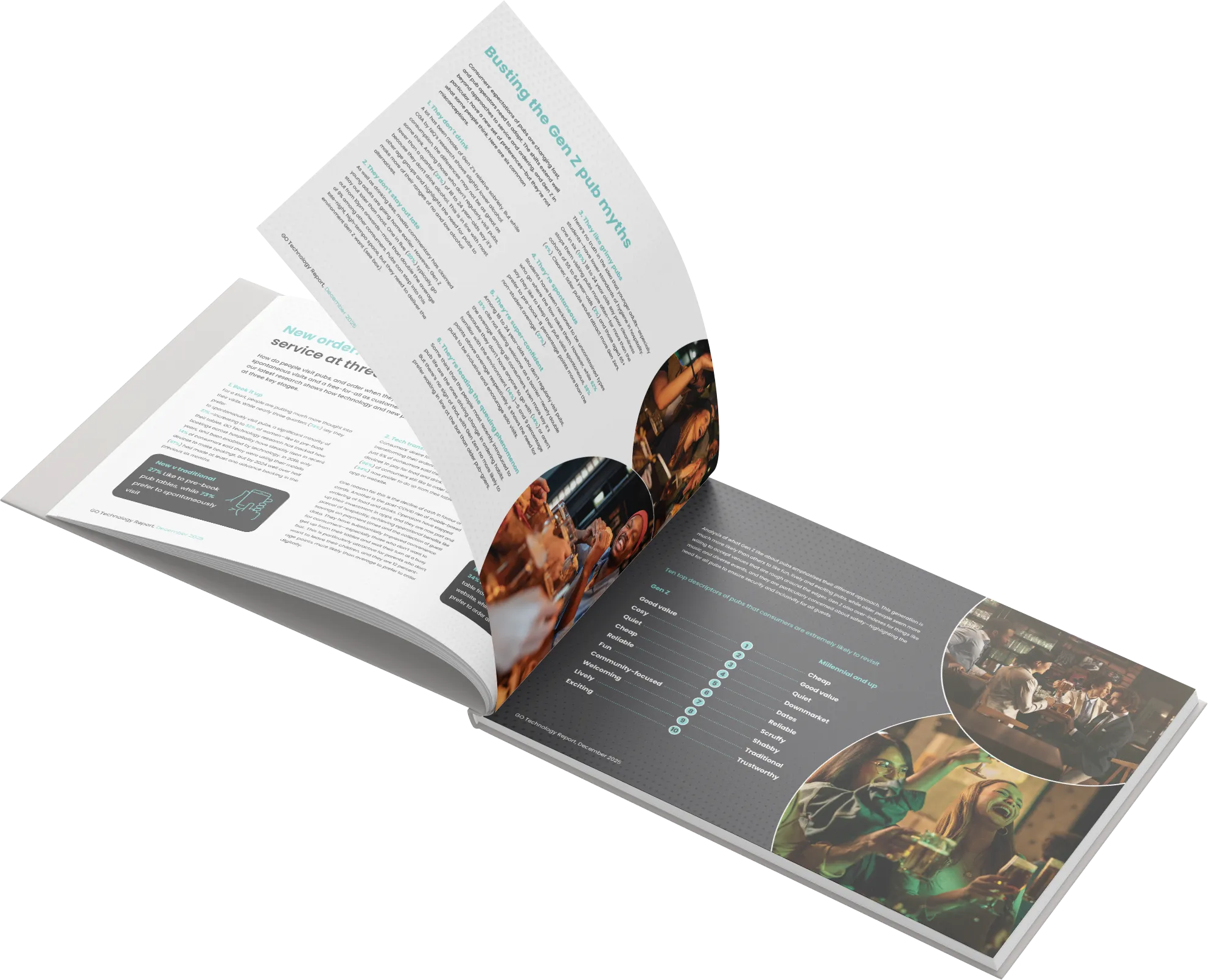
The new age of pub service

Exclusive research from Zonal and CGA by NIQ reveals the new styles of service consumers want from pubs; the top appealing factors, and barriers, to pub visits; and how Gen Z’s sentiment towards pubs differs from other generations.

Pubs remain a cornerstone of British communities, providing a vital social space for consumers, as well as offering up fantastic hospitality. With the continued rise of digital ordering solutions, a shift towards pre-booking rather than the more traditional spontaneous visit, and the emerging trend of queueing rather than spacing out along the bar, the way consumers are engaging with pubs is changing.

But what is driving the shift towards these new styles of service? What are the main factors drawing consumers to pubs—and what barriers are they facing? And what groups of consumers are seeing the greatest behavioural change?

This exclusive research, produced in partnership with CGA by NIQ, surveyed 5,000 British consumers to find out these answers, and more.

What's in the report?

  • Consumer demand for new vs traditional service styles in pubs
  • What Gen Z want from the pub
  • The top factors that drive pub visits
  • The top barriers to pub visits

Discover the latest consumer trends in hospitality

From who the influential consumers are and how to reach them, to expectations during the customer journey, and the role hospitality plays in consumers’ social lives, our GO Technology research series explores some of the key issues impacting our industry. Download our free reports for access to insights from over 5,000 British consumers.

Insights into the customer journey

Fact Sheet: Click & Collect

Tap into an additional revenue stream and allow your customers to engage
with your brand from their own homes. Click & Collect is fully integrated
with, and driven by, Zonal’s EPoS, removing the need for your team to reenter order information or update online menus if products go out of stock –
eliminating the manual headaches that can come with implementing additional
ordering channels

    Get in touch

    Contact our sales team to discover how Zonal products can help improve your bottom line

    Pub Accommodation Review 2025

    Exclusive research into consumer and operator sentiment towards the UK pub accommodation sector, produced in partnership with CGA by NIQ, Stay In a Pub, and VisitEngland.

    Amidst high demand for UK accommodation, there’s huge growth potential for UK pubs to boost revenue by making rooms a core part of their offering.

    Whether it’s a friendly welcome, high quality food and drink, or a more relaxed, welcoming atmosphere, a stay in a pub holds broad appeal for many consumers. But what are the key factors that influence guests in choosing to book a stay in a pub? How can pubs with rooms reach more guests? And what are the potential barriers causing guests to choose to stay elsewhere?

    This report, produced in partnership with CGA by NIQ, Stay In a Pub, and VisitEngland, provides an in-depth exploration of current guest sentiment towards the UK pub accommodation sector from both guests and businesses; identifying where the opportunity lies for pubs that invest in accommodation, as well as the view from pub accommodation operators.

    What's in the report?

    • What guests want from their stay in a pub
    • How are guests choosing where to stay?
    • How operators can capitalise on the pub accommodation opportunity
    • The top challenges facing pub accommodation providers

    The top 5 latest Order & Pay features to help you reduce overhead and boost efficiency

    Written by Natalie Millington

    28th March 2025

    With the upcoming National Insurance Contribution (NIC) increase, we understand the growing pressure on hospitality businesses to manage overhead and reduce operational costs. To help your team focus more delivering exceptional guest experiences — and less on manual tasks — our Customer Success Team has highlighted the latest key features released for our Order & Pay solution designed to streamline workflows, reduce staff intervention and drive efficiency across your operation.

    Enhance the guest experience with table-specific QR codes

    Our GO Technology research revealed that payment experiences are among the top 10 consumer frustrations. The key bugbears include having to wait to receive and settle the bill (77%) and being unable to split the bill (64%).

    Traditionally, this stage of the customer journey required staff involvement, however with table-specific QR codes that link to an ordering journey, this process becomes effortless. Each code is pre-configured with the correct venue and table number, allowing guests to access a seamless ordering and payment journey directly from their smartphones.

    A quick scan gives guests two simple options:

    1. Order & Pay: Instantly browse the menu and place orders without needing to select the venue or table. Fast, intuitive, and hassle-free.
    2. Pay My Bill: View and settle the bill in just a few taps, no staff assistance needed.

    The table-specific QR code eliminates friction, reduces staff workload, and keeps service flowing — ideal for high-traffic, fast-paced venues. By empowering guests to manage their own orders and payments, operators can boost efficiency, improve table turnover, and deliver a smoother, more enjoyable experience for every guest.

    Enable guest checkout to provide a frictionless guest journey

    Perfect for guests who prefer not to create an account, log in, or download an app, our web-based interface enables quick and easy ordering in just a few taps without requiring guests to sign up for an account which can sometimes be time consuming or require additional staff support. This streamlined approach is ideal for fast-paced, quick-service environments — allowing guests to place their orders quickly and easily while still receiving an email receipt.

    The result? A frictionless experience for your guests and reduced operational complexity for your team.

    Effortless bill splitting for a smoother payment experience

    Splitting the bill at the end of a meal can often be time-consuming and prone to mistakes when done manually. Our Order & Pay solution simplifies the process, offering guests flexible, easy-to-use bill-splitting options — all from their own device.

    With just a few taps, guests can choose how they’d like to settle the bill:

    1. Pay in full: Instantly cover the outstanding balance and proceed straight to payment.
    2. Split evenly: Divide the total bill between 2 to 99 guests, with automatic rounding for any tricky pennies.
    3. Pay a custom amount: Contribute a specific amount toward the bill, perfect for groups or shared orders.

    This feature helps to remove some of the hassle of manual calculations, eliminates errors, and gives guests complete flexibility — ensuring a seamless end to their dining experience.

    This flexibility reduces the need for staff involvement in calculating and processing payments, thus lowering overheads. Additionally, guests can opt to add a tip before completing their payment, streamlining the entire transaction process. Once the payment is made, a confirmation message is displayed, and an email receipt is sent to the guest.

    Mobile order manager enhancements

    The latest update to our mobile ordering manager platform offers several features to enhance operational flexibility and reduce overheads:

    1. Order mode control: Specific order modes can now be enabled or disabled (e.g., Click & Collect) at the site or sales area level, streamlining the process of managing different service options without requiring manual intervention from multiple teams.
    2. Menu category control: Specific menu categories can now be enabled or disabled, offering greater control over menu availability and reducing unnecessary labour costs.
    3. Snooze functionality: Order modes or menu categories can now be ‘snoozed’ for a set period (e.g., during peak times), automatically reverting to normal operation after the snooze period ends. This reduces the need for constant manual adjustments and minimises disruptions in service.
    4. Sales area-level wait times:  Custom wait times for specific sales areas can now be set, helping manage customer expectations and ensuring smoother operations during busy periods.

    Improved reporting and user management

    Several enhancements have been introduced to streamline the process for managing team member permissions and auditing changes made within Mobile Ordering Manager. These include:

    Increased Reporting Frequency & Scope: Mobile Ordering Manager’s interaction reports are now run daily, providing head office staff with more timely insights into site-level operations. This enables quicker action to address any negative behaviours, such as disabling online ordering during peak times.

    Self-Management of Users: Create, edit, and delete users directly within the platform. This accelerates user management tasks and empowers site managers to operate more efficiently.

    By implementing these innovative features and functionalities, Order & Pay can significantly reduce overhead costs and improve operational efficiency. These solutions not only enhance guest experiences but also minimise manual interventions, automate processes, and provide greater control over day-to-day operations. As a result, operators can reduce labour costs, optimise workflows, and improve overall profitability.

      Related resources

      research icon

      research

      GO Technology: Consumers and hospitality: 2024 in review

      Discover the key industry issues identified in our consumer research series this year in this in-depth 2024 review.
      Download the report

      Get in touch

      Chat with our sales team to learn about how Zonal products could benefit you.

      Hotels and consumers: Guest expectations and how to meet them in 2025

      This exclusive research report explores consumers’ engagement with the UK hotel market, what they expect during their stay, and how hoteliers can make the most of the opportunity.

      Both domestically and abroad, the demand for accommodation remains high, with 78% of consumers having stayed in a hotel in 2024.

      But guests’ engagement with hotels is evolving. With more discovery tools at their disposal than ever, and plenty of choice when it comes to the type of accommodation they want to stay in, it’s vital for hoteliers and operators to understand guest behaviour to stay ahead of the game.

      This report, produced in partnership with CGA by NIQ, surveyed over 3,000 British consumers to provide a deep dive into what it is guests are looking for when booking a stay in a hotel; including how often, and for what reasons, guests are staying in UK hotels, their engagement with F&B during their stay, and the factors that influence their choice of hotel when booking a stay.

      What's in the report?

      • The top five visit trends for UK hotels
      • The top reasons guests are visiting hotels
      • How guests are deciding where to stay, and factors influencing their decisions
      • Guests’ engagement with hotel F&B during their stay