Five ways AI is changing the way guests engage with hospitality

AI tools have quickly become part of everyday life, helping people plan holidays, compare products and find answers in seconds. As they become part of more people’s routines, they are also starting to shape how guests choose where to eat and drink. Our latest GO Technology report, AI and the Algorithm, carried out with NIQ, surveyed 5,000 nationally representative British consumers to understand who is using AI to find venues, what they are asking it and how far they trust the answers.

Choosing where to eat or drink has often involved a little research, whether that means asking a friend, scanning reviews or checking a menu online. Our research shows that AI is evolving to be a significant part of that process research. Nearly one in five British consumers (19%) use AI tools such as ChatGPT or search engine summaries when planning a visit to a pub, bar or restaurant, and half (50%) say they would consider doing so in future.

The report, AI and the Algorithm, points to a habit that is moving steadily into the mainstream, and to some useful lessons for operators about how guests will find them in the years ahead.

AI is adding to discovery, not replacing it 

Recommendations from friends and family still influence nearly half of consumers (47%), while reviews (32%) and venue websites (25%) continue to play an important role. AI is now used as widely as social media (19%) for venue research, and with half of consumers open to trying it, its share of the discovery journey looks set to grow.

Where AI does stand apart is in how heavily its users lean on it once they start. Of the guests who use AI to plan a visit, 70% make it their sole or primary source: half begin their research there before checking elsewhere, and one in five (20%) let it plan the entire visit.

That reliance rests on a good level of trust, as around three quarters of consumers using AI to plan visits to hospitality(76%) say they entirely or mostly trust AI engines, placing them ahead of reviews (68%) and venue websites (64%) and behind only the recommendations of friends and family (88%). For a technology that has only recently become part of everyday life, that is a notable level of confidence, and it helps explain why so many users are comfortable letting it shape their plans.

AI users are a valuable audience 

Adoption varies considerably by age, with around a third of Gen Z (34%) using AI to plan a visit, compared with 13% of Gen X and 5% of Boomers. It also rises with frequency: 42% of guests who eat out at least three times a week use AI, more than four times the rate among those who go out once or twice a month (10%).

A similar pattern appears with spend and location. Guests who spend £60 or more a head are more likely than average to use AI to find a venue (23%), and in London the figure rises to 39%, more than double the rate across the rest of the country (16%). Taken together, the research suggests that guests turning to AI tend to be younger, visit more often and spend more, which makes them exactly the guests that estates and portfolios across the country are working hardest to attract.

What are guests asking AI? 

For the most part, guests use AI to answer practical questions. Reviews top the list (45%), followed by prices (43%), menus (38%) and opening times (35%), with deals (28%), booking processes (28%), accessibility (22%), child-friendly facilities (20%), allergens (16%) and pet policies (16%) also featuring.

Much of this information already exists on venue websites, booking pages and review platforms. What AI offers guests is a quicker way of bringing it together in one place, so the quality of the answer they receive depends on how accurate and consistent that information is wherever it appears online.

Discovery is becoming a data question 

Search engine optimisation has long shaped how venues are found online, and generative engine optimisation, or GEO, is now emerging alongside it. Rather than simply ranking web pages, AI tools gather information from many sources, compare it and present guests with a shortlist, allowing them to consider more information when making a decision on where to go than they may have done previously.

For multi-site operators, this puts consistency across every channel and every site firmly in focus. Opening hours that match across the website, booking page and Google listing, menus and allergen details that are kept up to date, and reviews that reflect the experience guests enjoy today all help AI tools present an accurate picture of a venue. Where information is missing or contradictory, a venue may not make the shortlist at all, and the operator is unlikely ever to know that a visit was missed.

Looking further ahead 

For now, AI is mainly used before a visit rather than during one. Only 10% of consumers use it in a venue, behind venue websites (22%), digital menus (19%) and venue apps (18%). Even so, 39% of AI users already turn to it for recommendations on what to eat, and 36% to keep up with food and drink trends, which suggests its role during a visit could grow if the tools are able to offer more and more personalised recommendations.

Beyond discovery, AI could also play a bigger part in how guests plan and enjoy their visits. Let’s explore three potential use cases.

  1. Planning the whole occasion, not just choosing the venue

One in five AI users (20%) already let it plan their entire visit, and many ask it questions that go well beyond where to go, from how to book (28%) and how to get there (25%) to what events are on (23%), how busy a venue is likely to be (19%) and what else is nearby (18%). As the tools become more capable, we expect more guests to plan an entire occasion in a single conversation, from choosing a venue and checking availability to arranging travel and finding somewhere for a drink afterwards. Venues that keep this information complete and up to date are more likely to be part of those plans.

  1. Help choosing what to order

With so many AI users already asking it what to eat, that habit is likely to carry through into the visit itself, with more guests asking AI for a recommendation from the menu in front of them, checking which dishes suit their dietary needs or looking for a drink they have seen trending. Clear, accurate menu and allergen information will help make sure those recommendations reflect what a venue serves.

  1. Answers to the questions that decide a visit

Beyond the basics, guests are using AI to answer the specific questions that often decide whether a venue is right for them, such as whether it is accessible (22%), child-friendly (20%) or pet-friendly (16%), how busy it is likely to be (19%) and what allergen information is available (16%).With consumer usage set to increase in future, AI answers could be disqualifying venues from consideration before a guest even visits their website. Because AI draws on many sources at once, from listings sites to older reviews and social posts, the answer a guest receives may not always match what a venue offers today, which makes keeping that information accurate wherever it appears more important than ever.

What doesn’t change 

Hospitality is a people business, and while AI may increasingly influence how guests find a venue, it is the welcome, the food and the service that bring them back. What AI does change is the value of good data. Operators who keep their information accurate, consistent and connected across every site will be well placed to reach the guests who visit most often and spend the most.

The full report explores these findings in more depth, including how trust in AI differs between generations, the other questions guests most often put to AI tools, and why NIQ describes AI as “a critical battleground for hospitality in the months and years to come”. Download AI and the Algorithm to read the full findings.

Get in touch

Chat with our sales team to learn about how Zonal products could benefit you.

Back to Business: Winning Guests as Summer Ends and Student Season Begins

Written by Natalie Millington

25th August 2026

As summer draws to a close, hospitality operators are entering one of the most important transition periods of the year. Families return to their routines, schools reopen, university students arrive in new cities, and consumer habits begin to shift from sunny beer gardens and spontaneous visits to planned social occasions and value-conscious spending.

For pubs, bars, restaurants, and quick-service venues, this seasonal change presents a valuable opportunity to reconnect with existing guests, attract new audiences, and build loyalty ahead of the busy autumn and festive trading periods.

The question is: how can businesses make the most of it?

Understanding the Autumn Consumer Mindset

The transition from summer to autumn often brings a change in customer priorities. Consumers become more budget-conscious, routines become more structured, and guests are increasingly looking for value-driven experiences that fit around work, education, and family commitments.

At the same time, research from Zonal highlights that loyalty, personalisation, and customer experience remain key factors influencing where guests choose to spend their money. In a challenging economic environment, brands that consistently deliver relevant offers and rewarding experiences are more likely to retain customers and increase visit frequency.

For operators, this means moving beyond blanket discounts and focusing on targeted engagement strategies that appeal to distinct customer groups.

Capitalising on Freshers and Student Arrivals

September marks the arrival of thousands of students into towns and cities across the UK. Freshers represent more than just a short-term sales opportunity. They are potential long-term customers who may spend several years living, studying, and socialising within your catchment area.

To attract this audience:

Create Student-Friendly Promotions
Students are actively seeking value as they settle into university life. Consider:

  • Exclusive student discounts
  • Meal-and-drink bundle offers
  • Midweek promotions
  • Welcome-week incentives
  • Group dining packages

Using Zonal’s Promotions functionality, businesses can create targeted offers that encourage trial visits while protecting margins.

From the Customer Success team at Zonal:

“Multiple tiers could be set up to target specific societies within a university. By having unique rewards for a society, they can help build a great affiliation. This could help target specific days when they train and in return help drive trade for quieter periods – typically midweek.

An attractive sign-up offer can really go a long way to a successful launch of a loyalty program. This can either be a free item for registration or additional currency/ points. Points and Currency rewards can be delayed to the following day after sign-up. As well as delaying the reward, an expiry can be set. This helps target return footfall and spend in a short period.

A ‘points for spend’ would be a fantastic way to encourage spending in the venue. These points could be then exchanged for items or converted into currency to spend across the venue. This would give the students something tangible to aim for. Double points can be offered at specific times to drive sales in quieter times. Double point offers could also be applied to specific sites at specific times. For example, food venues on a Tuesday evening could be made available when the venue might usually be quieter.

Due to the very nature of the sales being very term time led, this can lead to items (specifically food) perishing and lead to food waste. If there is a lot of specific items left that is going out of date after the term, rewards can be created specific to these items to help sell them.”

Build Loyalty Early

Rather than focusing solely on acquisition, think about retention from day one.

Loyalty programmes allow operators to encourage repeat visits through points, rewards, exclusive benefits, and personalised offers. Zonal’s Loyalty platform enables businesses to track customer behaviour, reward engagement, and build a richer understanding of guest preferences.

A free birthday drink, rewards for repeat visits, or incentives for referring friends can all help turn first-time visitors into loyal advocates.

Prioritise Digital Convenience

Today’s students expect frictionless experiences. Mobile ordering, digital engagement, and seamless payment experiences can significantly influence venue choice.

Making it easy for guests to book, order, pay, and receive relevant communications helps create a customer experience that matches modern expectations.

Re-engaging Families After the Summer Holidays

While students are settling into university life, families are returning to school routines and looking for ways to balance convenience, value, and quality time together.

Operators can appeal to this audience by:

Introducing “Back-to-Routine” Offers

Examples could include:

  • Kids eat free promotions
  • Early-evening family dining deals
  • Midweek meal bundles
  • Post-school treat offers

These promotions help drive footfall during quieter trading periods while giving families a compelling reason to choose your venue.

Making Booking Easy

As schedules become busier, convenience becomes increasingly important.

Encouraging guests to pre-book family meals, Sunday lunches, or special occasions can help secure future revenue while improving operational planning.

Using Customer Data More Effectively

One of the biggest opportunities this autumn lies in making better use of customer data. Many hospitality businesses already hold valuable information about their guests, but those insights often remain underutilised.

  • Customer data can help operators:
  • Identify lapsed customers
  • Segment audiences
  • Deliver personalised communications
  • Reward loyal guests
  • Measure campaign effectiveness

Research from Zonal’s loyalty and consumer insight programmes continues to show that guests respond positively to relevant, personalised engagement rather than generic marketing messages.

For example, instead of promoting the same offer to everyone, businesses can tailor campaigns based on visit frequency, spend history, or customer preferences.

Think Seasonal, Not Just Promotional

While discounts can drive short-term footfall, the most successful autumn campaigns focus on creating memorable experiences.

  • Consider introducing:
  • Seasonal food and drink menus
  • Autumn-themed events
  • Quiz nights and social gatherings
  • Community-focused activities
  • Sports viewing experiences

Industry research indicates that many operators plan to use seasonal promotions as a key revenue driver, recognising that consumers continue to seek experiences worth leaving home for.

The goal should be to create reasons for guests to visit that extend beyond price alone.

Preparing for a Successful Q4

September is more than just the end of summer. It is the start of the run-up to the busiest trading period of the year.

  • Businesses that use this period effectively can:
  • Acquire new customers before competitors
  • Re-engage lapsed guests
  • Grow loyalty programme memberships
  • Strengthen customer relationships
  • Build momentum ahead of Christmas

By combining targeted promotions, loyalty initiatives, customer insights, and seasonal experiences, operators can position themselves for a strong final quarter.

Final Thoughts

As the seasons change, so do customer behaviours. The businesses that thrive are those that adapt quickly, understand their audiences, and use technology to deliver the right message, to the right guest, at the right time.

Whether you’re welcoming freshers, reconnecting with families, or nurturing loyal regulars, now is the perfect moment to turn seasonal change into commercial opportunity.

With the right mix of promotions, loyalty, personalisation, and guest experience, autumn could be your most successful season yet.

Get in touch

Chat with our sales team to learn about how Zonal products could benefit you.

Five World Cup Lessons to Apply Before the Next Big Match

During the World Cup, pubs and bars faced one of the busiest trading periods of the year, with an estimated 9.3 million consumers making plans to watch the World Cup in a hospitality venue. This additional demand for a visit to the pub provided a significant opportunity for operators, so as part of our GO Technology consumer research produced in partnership with NIQ, powered by CGA intelligence, we surveyed 5,000 British consumers to find out what would get them through the door to watch the tournament, and what would keep them coming back.

With the tournament finished, and more football kicking off soon, the value now is in applying those learnings before the next big match, so businesses can be ready for the demand that live sport brings.

Make Bookings effortless 

Our research found that around a third of hospitality viewers (32%) said the ability to book a table increased their likelihood of visiting a venue. For a pub estate, giving fans a way to book ahead secures demand ahead of time rather than relying on walk-ins, and allows businesses to better plan staffing and stock requirements.

But the benefits of booking systems don’t stop there. They can also help make better use of the room itself, allocating tables based on the booking rather than on a first come, first served basis, so more of the space gets used well on a busy night. Spend can move beyond the pint too: pre-paid extras, from a reserved spot by the big screen to a food and drink package, can be booked in advance, and we’ve previously seen an average 15% uplift in basket spend from guests who pre-order.

Convenience drives spending

Our research also found that 31% of guests said they’d be drawn in by the chance to order food and drinks without leaving their seat. When guests are engrossed in the game, the last thing they want is to miss a key moment while waiting at the bar.

At-table ordering lets guests order and pay digitally from their seat, with the order sent straight to the bar or kitchen screen. Making it easy for customers to order a second round or a snack, upselling extras at the right point in the ordering journey and complete a payment from their own devices helps drive incremental spend throughout the game by eliminating that potential pain point of missing a key moment. It helps on the staff side too: less time spent taking orders means more time spent on the ones already placed, so more rounds get through during a match.

Loyalty matters on match day 

Loyalty schemes proved a real, if smaller, visit motivator too. 22% of consumers watching in pubs and bars said loyalty rewards were a reason to visit. A big communal occasion like this doesn’t come round often, and it’s a chance to turn one-off visitors into regulars, but only if the scheme is ready before guests arrive.

A loyalty scheme works because it gives a guest a reason to come back and use the rewards they’re already earning, rather than trying somewhere else. Match days are a natural moment to make that reason stronger, whether that’s double points or a bigger reward tied to the occasion, landing the incentive right when demand is highest. Loyalty schemes do more than encourage repeat visits too: they’re one of the best ways to gather guest data, from contact details to how often someone visits and what they order, and that data can then feed into marketing activity, such as offering early access to bookings for the next big event.

The pre-order opportunity 

Just over a fifth of guests, 21%, said they’d be more likely to visit a venue if they could pre-order food or drinks. It’s a small addition that can make a real difference around a big date on the calendar: guests choose their food and drink when they book, so the kitchen has a clearer picture of what’s needed before service even starts. That takes some of the guesswork out of a busy night, and some of the spend is already in place before guests arrive. It’s worth setting the menu up in good time, so it’s ready whenever the next big occasion comes around.

Personalisation still has a place 

Personalised offers were the smallest driver, at 17%, but they still matter. Every booking, order and loyalty sign-up creates a small piece of information about a guest: what they ordered, how they like to pay, how often they’ve been back. Brought together, that data can shape offers that feel relevant rather than generic, and cut out the obvious mismatches too; for example, not offering a beer discount to a cider drinker, or a burger deal to someone who only orders the veggie option. That’s the difference between a promotion sent to everyone and one that feels like it was made for the guest receiving it.

These aren’t habits that appeared for one tournament. Guests who wanted to book ahead, order from their table, and be recognised as regulars will want the same at the next big match, cup final or major sporting occasion. The operators who put these learnings into practice now will be the ones ready when it does.

To learn more about how Zonal’s connected technology could help your pub estate make the most of the opportunities live sports can bring, get in touch today.  

Get in touch

Chat with our sales team to learn about how Zonal products could benefit you.

The new age of pub service

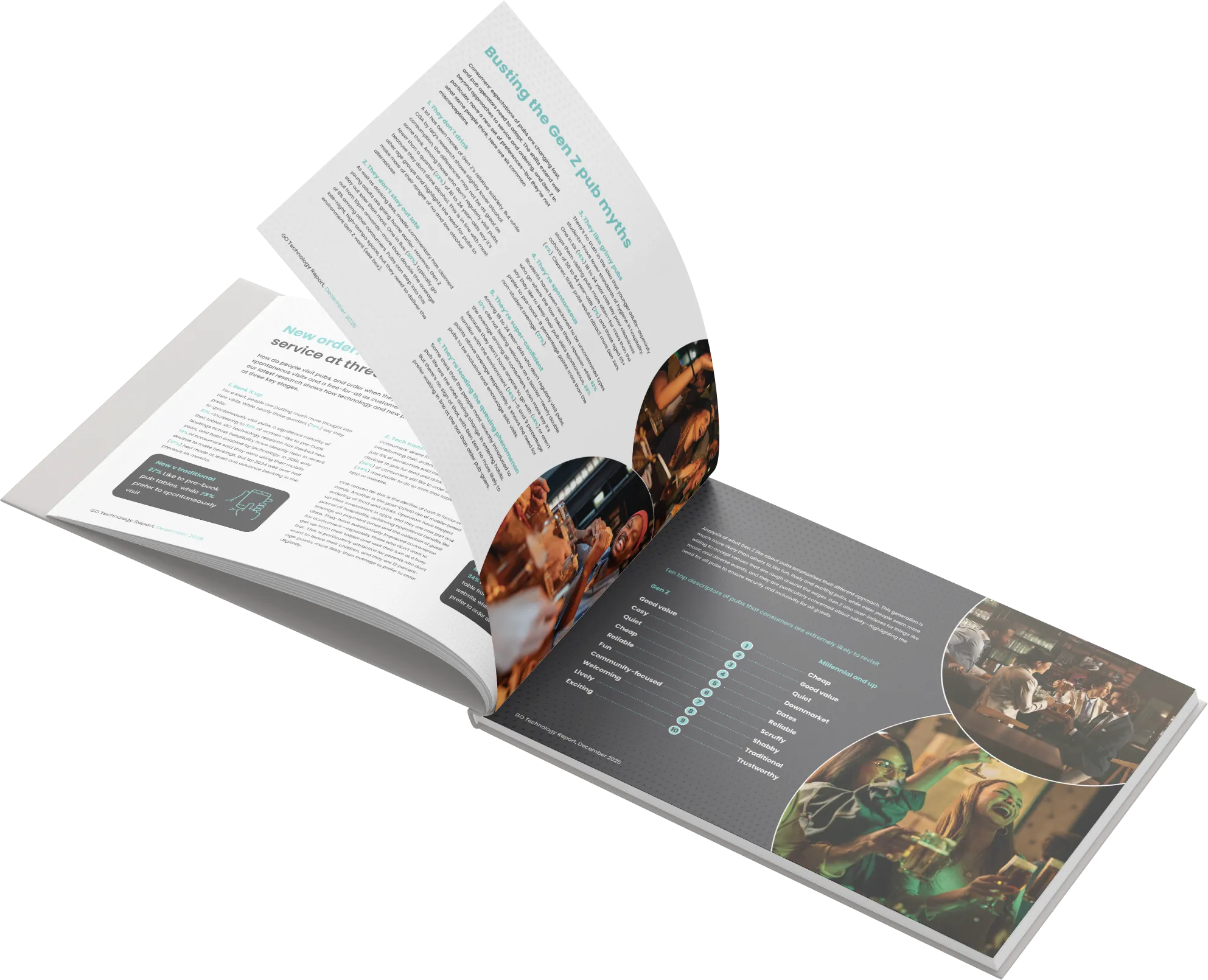
Exclusive research from Zonal and CGA by NIQ reveals the new styles of service consumers want from pubs; the top appealing factors, and barriers, to pub visits; and how Gen Z’s sentiment towards pubs differs from other generations.

Pubs remain a cornerstone of British communities, providing a vital social space for consumers, as well as offering up fantastic hospitality. With the continued rise of digital ordering solutions, a shift towards pre-booking rather than the more traditional spontaneous visit, and the emerging trend of queueing rather than spacing out along the bar, the way consumers are engaging with pubs is changing.

But what is driving the shift towards these new styles of service? What are the main factors drawing consumers to pubs—and what barriers are they facing? And what groups of consumers are seeing the greatest behavioural change?

This exclusive research, produced in partnership with CGA by NIQ, surveyed 5,000 British consumers to find out these answers, and more.

What's in the report?

  • Consumer demand for new vs traditional service styles in pubs
  • What Gen Z want from the pub
  • The top factors that drive pub visits
  • The top barriers to pub visits

Discover the latest consumer trends in hospitality

From who the influential consumers are and how to reach them, to expectations during the customer journey, and the role hospitality plays in consumers’ social lives, our GO Technology research series explores some of the key issues impacting our industry. Download our free reports for access to insights from over 5,000 British consumers.

Insights into the customer journey

Five pre-order pitfalls to avoid this Christmas, and how to fix them

We’re only in September and we’re at it again – talking about pre-orders ahead of Christmas! That’s because, when it comes to hospitality, if there’s one thing you can rely on, it’s the fact that nothing ever goes exactly to plan. You can prep for weeks, polish the cutlery until it shines, and line up your pre-orders like ducks in a row, but the big day always has a way of throwing in a surprise or two.

Sometimes it’s small (like three people swapping their mains at the table and pretending they definitely ordered it that way), and sometimes it’s big (like, say, an uninvited fire alarm deciding to go off during the event).

The truth is, in hospitality, the unexpected is inevitable. But that doesn’t mean you can’t be prepared. Pre-ordering should be the stress-busting superhero of busy service, but when it goes wrong, it can quickly turn into the villain of the piece.

That’s why we’re here. Zonal’s Customer Success team have shared the top 5 things that can (and often do) go wrong with pre-orders on the big day, and how we can help you sidestep the chaos. Because while we can’t stop the universe from throwing curveballs, we can make sure pre-order isn’t one of them.

1. The Night Before Panic

It’s the day before the Christmas parties start arriving, you’ve been chasing the party for their final pre-orders and they’ve not picked up your calls. Then the night before, they open their emails and realise they have missed their pre-order cut-off.

Our fix: Use your Host access to do it!

Pre-Order allows you to set a cut-off. This is a timeframe that you display to your guests when booking as to how long they have to make their mind up of what they will eat on the day. But we know it doesn’t always work out like that and people miss a deadline – so as a Host, we allow you to make pre-order changes within the Guest portal up until the early hours of their arrival.

Once the Guest Pre-Order cut-off has been reached, the guest will not be able to make an order. A message will show stating “Attendees cannot be added after the pre-order cut-off”. If selecting to edit an attendee choice, a red message will display showing “Pre-Ordering is now closed. Please contact the restaurant if you have not submitted your choices or if you need to discuss this further”.

The Host, however, will have the ability to add any additional attendee names to the booking, as well as make amendments to the pre-order selections. The Host cut-off will be defined in the booking summary under pre-order – for the majority, it’s configured to be around 04:00 on the day of the booking – after this point, you’ll need to make changes on the POS.

2. Arriving and changing the order

You had a neat list of who ordered what. Then once everyone has arrived, someone decides they don’t actually eat chicken, they’ve gone vegan “since Tuesday,” and suddenly the table’s a game of musical chairs with mains. Having pre-orders delayed in sending to the kitchen lets you make last-minute swaps quickly, so you’re not left with a lonely chicken dish.

Our fix: Update it on the POS.

Once a pre-order reaches the POS, they are stored on the till as delayed orders.

To view the orders, navigate to “Pick up Account” on the till (often found in Options).  This will display all open accounts within the sales area.

You’ll be looking for “Delayed Orders”.

You want to select the name of the booking. when selected, it’ll present a message that “The order preparation has not been started. Request this now?” – you’ll need to select “No” here.

If you select Yes, you’ll need to quickly tell your team to stop prepping as this will send the order through to the kitchen, but it won’t have a table number.

After selecting “No”, the ticket will show. You’ll then need to select “Tables” and click the table number, for which you’ll be asked “Are you sure you want to move Account Number X to Tables XX” – to which you’ll select “All Items”.

You will now have the opportunity to pick up the account and further modify it.

If the order (as shown below) is in an orange state, it’s because the order is in a Hold state. This will prevent the order sending to the printer. You will need to select the “Hold Delayed Order” button to then release the order (it’ll revert to white text) and this, once saved, will send to the relevant printers.

Doing this means that you have the opportunity to set the table number, and make the pre-order changes at 11:30am when the event is at 12:00pm

3. The “I Definitely Didn’t Order That” Moment

A guest swears they ordered the steak. Your pre-order sheet says fish. Now you’re stuck playing referee in a battle of wills.

Our fix: Place cards, chef reports, run sheets and portals. We’ve produced many routes to viewing pre-orders on the day or in the run up.

Place Cards:

You can have these on the table for the guests arrival. Having the guests name on one side and their pre-order on the other, whether they’ve have had a tipple or their attention is not on you when handing out the food, a place card can help with that.

Chef Report:

The Chef Report can be extracted for future dates, as well as the current day. Viewing either by:

Products – for quantities of products/items,

Date – useful when selecting a date range.

Time – perfect for seeing requirements throughout the day.

Event – a break down by party.

Guest – showing a breakdown of each guest attending and their specific items ordered.

Run Sheets:

If you have our Central Reservations feature enabled, you will have Run Sheets.

A Run Sheet will offer everything you need for a booking, From booking details, to pre-orders, booking requests and even dietary requirements. A run sheet is perfect for those larger parties.

All of these are digital receipts and confirmations. Both you and the guests can see exactly what they ordered ensuring there’s no awkward debates mid-service of who ordered what, or whether they chose custard or ice cream with that Christmas Pudding!

4. The Dreaded 86’d Item

Everything’s running smoothly… until the kitchen runs out of an item on the Thursday night. Cue Friday morning, pre-orders are failing to send to the POS.

Our fix: With live menu management, sold-out dishes are instantly updated in the pre-order system. At the sender window time (for the majority it’s defined at 04:00), pre-order will fail to send to the POS as it awaits your action. It’s the system’s way of flagging that you need to act.

The Chef Report helps you manage this. Here’s some simple steps on how you can resolve an out of stock issue:

  1. Navigate to the Reports Tab.
  2. From the Report Categories, select Pre-Order.
  3. Using the date range selector, amend the start and end date to the current day.
    All pre-orders will display. Using the Event view of the report, users are presented clearly with the reason for a pre-order not sending. Should the reason for “Product Out of Stock”. If this error shows, you will need to go to the POS and put the item back in stock.
  4. Choose the option beside the booking to Resend Pre-Order.
    There is only 1 retry attempt possible, should there still be an issue and the items fails to send you have to manually add it to the pre-order.

5. The Curveball You Can’t Predict

Gas leak. Fire alarm. A delivery that never arrives. Hospitality is full of chaos you can’t control. But when pre-orders run smoothly, at least it’s one less fire (sometimes literally) to put out.

Our fix: Test before the day. We can’t recommend enough that you test with your team. Maybe role play, maybe ask your Account Manager for support with one of the Customer Success team. We are here to help take the pre-order stress off your plate, so you’ve got the headspace to deal with whatever else the day throws at you.

At the end of the day, hospitality will always keep you on your toes, because if it’s not a guest changing their mind, it’s the fire alarm going off right as mains are about to go out (and yes, that happened to me with 250 covers waiting for Christmas meals on black Friday!).

While we can’t stop the unexpected, we can make sure pre-orders don’t add to the chaos. With the right system in place, you’ll save time, reduce stress, and keep your focus where it matters most: delivering a brilliant experience for your guests.

Because let’s face it – unexplained fire alarms happen. Pre-order disasters don’t have to!

Get in touch

Contact our sales team to discover how Zonal products can help improve your bottom line

Why 6:12pm is the new 8pm

Exclusive research from Zonal and CGA by NIQ reveals a shift in consumer behaviour towards going out earlier when visiting pubs, bars, and restaurants, as well as the factors influencing this shift.

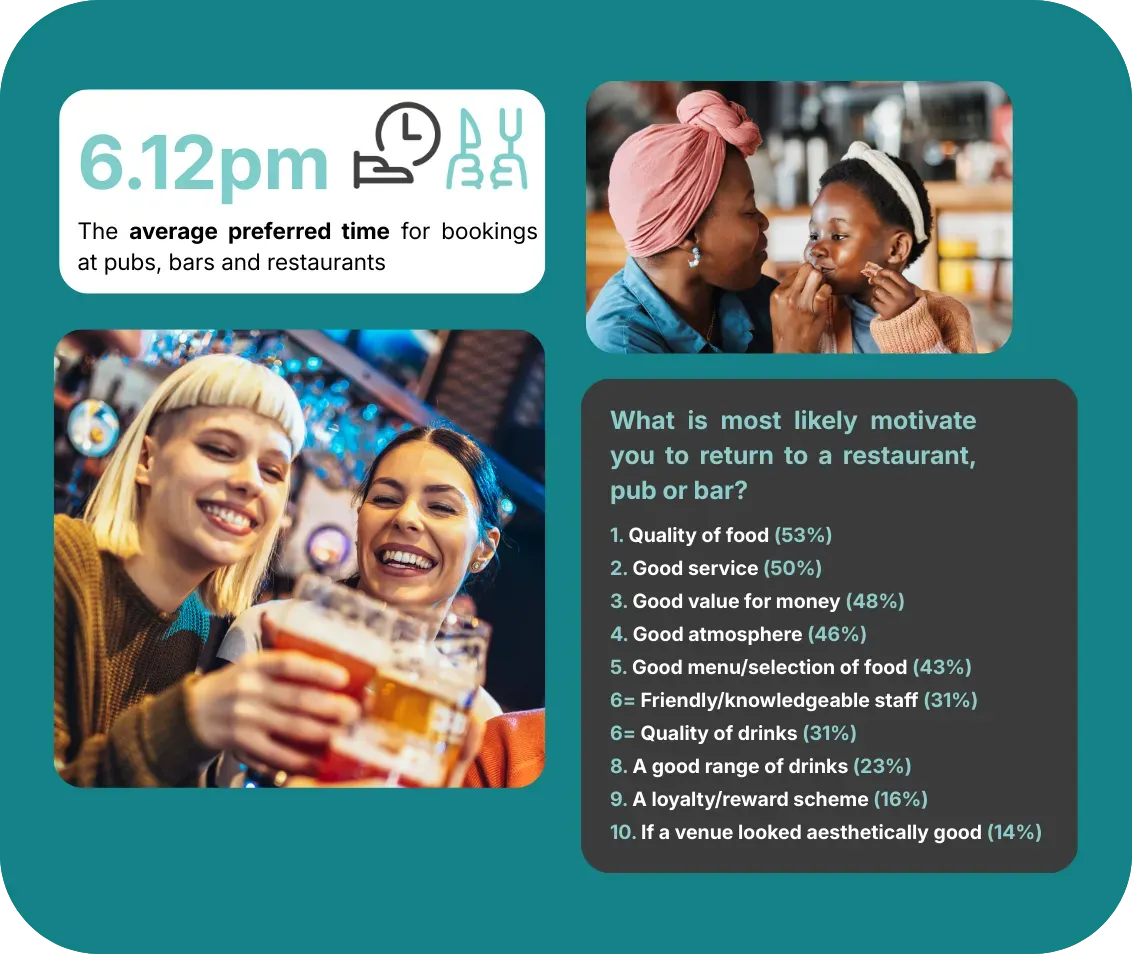
Consumer behaviour is shifting towards going out earlier, with the new preferred start time for consumers’ bookings at pubs, bars, and restaurants now sitting at 6:12pm.

This marks a continuance of a trend that started post-pandemic, with consumers increasingly favouring convenience when it comes to their visits to hospitality venues. But what are the key factors that are influencing this shift towards earlier booking times? Which consumers are seeing the biggest behavioural shifts? And what are the biggest priorities for guests when choosing to visit hospitality venues earlier?

This research, produced in partnership with CGA by NIQ, surveyed 5,000 British consumers to find out these answers, and more.

What's in the report?

  • Guests’ preferred booking times when going out
  • The top reasons consumers are choosing to go out earlier, and why they may choose to go out later
  • Which groups of consumers are seeing the largest change in behaviour
  • Consumers’ top priorities when choosing what time to go out

Seamless stays and smooth operations: The impact of Zonal PMS on pub accommodation

Pubs with rooms are on the rise. With more than 5,700 pubs with rooms across the UK —equating to around 50,000 guest rooms—and 41% of operators planning to expand their offering, it’s a market full of momentum. Pubs with rooms are perfectly placed to meet the needs of guests who want the charm, informality, and character of an Airbnb, but with the service standards, food, and drink experience only a pub can offer. In the article, Are pubs with rooms the new boutique hotels?, The Caterer recently reported on the growing trend of consumers turning away from budget hotel chains to mid-market pub groups with rooms.

With the right technology in place, pub operators have a unique opportunity to capitalise on this trend—streamlining operations, improving visibility, and delivering exceptional guest experiences from booking to checkout.

One of the most important aspects of Zonal PMS is its ability to enhance property visibility online in the market by integrating directly with online travel agents as well as your own website. A joined-up tech stack which feeds directly into the OTAs, saves a lot of time and makes selling your rooms significantly easier —with real-time availability making it possible to sell rooms right up to the last minute.

The technology also allows you to track customer data, ensuring that the guest journey can be followed from start to finish. This level of insight provides you with valuable information to help tailor and deliver great service to guests.

We recently spoke to some of the Provenance Collection team to find out what benefits integrated technology has had to their business.

More time to focus on your guests

With Zonal PMS teams are freed up to focus spending more time with customers on creating great hospitality experiences for guests, where staff can be out on the floor engaging with customers, instead of spending time on admin. It’s not so much about eliminating tasks, but instead about freeing up staff to do what they really care about – creating great experiences.

Easily manage rooms rates

Zonal PMS enables pub operators to efficiently manage bedroom booking rates, especially across multiple sites. What could take up to 12–15 hours per week can now be handled in just a couple of hours with Zonal PMS —freeing up valuable time.

One system, one experience: service consistency across sites

Utilising one platform to manage your accommodation across your whole estate means that staff training is centralised across all sites, and service is consistent because staff are using identical technology across locations, processes such as booking, check-in, check-out, and billing are streamlined—ensuring accuracy and delivering a seamless guest experience.

Boost F&B sales with table bookings integration

We understand how frustrating it can be for guests to navigate a disjointed booking process—reserving a room, only to have to return to the website and click through again if they want to book a table as well. With the right technology in place, such as a table booking system that integrates natively with your PMS, guests can reserve a table in the pub’s restaurant at the same time they book their room. What’s more you can offer guests the opportunity to purchase optional extras whilst booking their stay and include optional extras such as Champagne, Flowers, Early Check-Ins and Late Check-outs. This not only streamlines the experience but also creates valuable upselling opportunities for food and drink, reduces admin for your team, and enhances the overall guest journey.

Reward and build guest loyalty

Zonal’s loyalty platform can also play a role here in helping venues encourage and reward repeat visits, where points can be collected and offers can be distributed through the platform. For example, hotel guests who stay regularly may earn points for each visit, and as it builds up, they’ll eventually have enough for a for a free stay.

In addition to rewarding loyal guests and driving repeat visits, an integration with Zonal’s loyalty platform can also help you boost guest spend during their visit and boost engagement with both the accommodation and F&B sides of your business. Loyalty rewards accrued from a guest booking a stay with you can be redeemed in your restaurant or bar, and vice versa, with any loyalty balance built from guests eating and drinking in your pub able to be used to pay towards their room during a stay.

Get in touch

Chat with our sales team to learn about how Zonal products could benefit you.

Lunch leads the way for the Easter 2025 bank holiday weekend

Diners ditched dinner and large group bookings this Easter weekend, new insights from leading hospitality technology provider, Zonal, show.

The data shows that nearly half (44%) of all bookings made during lunchtime hours over the long weekend happened on Easter Sunday, with lunch making up 60% of total reservations on that day.

Across the four-day weekend, lunch remained the most popular time to dine on Sunday and Monday, comprising 56% of all bookings compared to just 28% for dinner.

In contrast, dinner proved to be more popular on Good Friday and Easter Saturday, making up 44% of bookings made on those days, compared to only 34% for lunch.

The data also revealed that experiences with fewer diners were favoured over larger group gatherings, with bookings for two people making up 33% of all reservations across the Easter weekend.

Tim Chapman, Chief Commercial Officer at Zonal, commented: “This Easter weekend, lunch clearly led the way in dining preferences, particularly on Sunday and Monday, when it accounted for 56% of bookings compared to just 28% for dinner.

“Unlike other celebratory events that are often associated with evening socialising and late-night gatherings, Easter typically emphasises daytime activities, such as family lunches, egg hunts, and community events. As a result, many chose to dine out earlier in the day, reinforcing lunch as the dominant mealtime.”

    Get in touch

    Chat with our sales team to learn about how Zonal products could benefit you.

    Mother's Day bookings up, as the trend to book further in advance continues

    The number of guests booking more than a week in advance to celebrate Mother’s Sunday rose 10%

    New insight from Zonal reveals a rise in bookings for Mother’s Day, driven by a notable increase in organised consumers making reservations further in advance.

    Bookings made more than a week ahead were up by 10%, reflecting a growing trend of consumers forward planning for special occasions or events. Zonal research from earlier this year, revealed advance bookings (those made more than a week ahead) for the opening match of the Guinness Six Nations rugby tournament were up nearly 40% on the comparable period for 2024.

    Lunch continued to be the most popular dining session for Mother’s Day celebrations, accounting for over half (59%) of all bookings, followed by dinner reservations, which made up 29% of all bookings. Potentially reflecting a growing preference for earlier dining times, bookings before 7pm accounted for the vast majority of total bookings (91%).

    Tim Chapman, Chief Commercial Officer, Zonal, commented: “The rise in early bookings for Mother’s Day highlights a clear shift in consumer behaviour, with guests increasingly planning their celebrations in advance and favouring lunch as the main event of the day.

    “For operators, this offers a valuable opportunity to plan ahead for next year – by engaging guests early, promotions around quieter times, and ensuring they’re prepared to meet the demand. Capitalising on the growing trend for early lunch bookings will allow operators to optimise service, elevate the guest experience, and drive revenue growth during this key occasion.”

      Related resources

      research icon

      research

      GO Technology: Consumers and hospitality: 2024 in review

      Discover the key industry issues identified in our consumer research series this year in this in-depth 2024 review.
      Download the report

      Get in touch

      Chat with our sales team to learn about how Zonal products could benefit you.