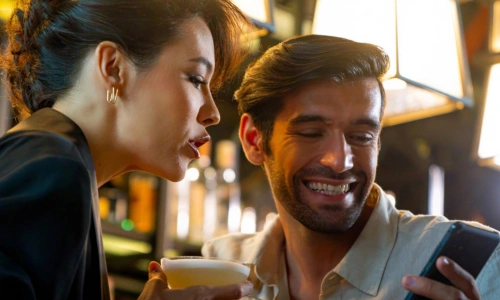
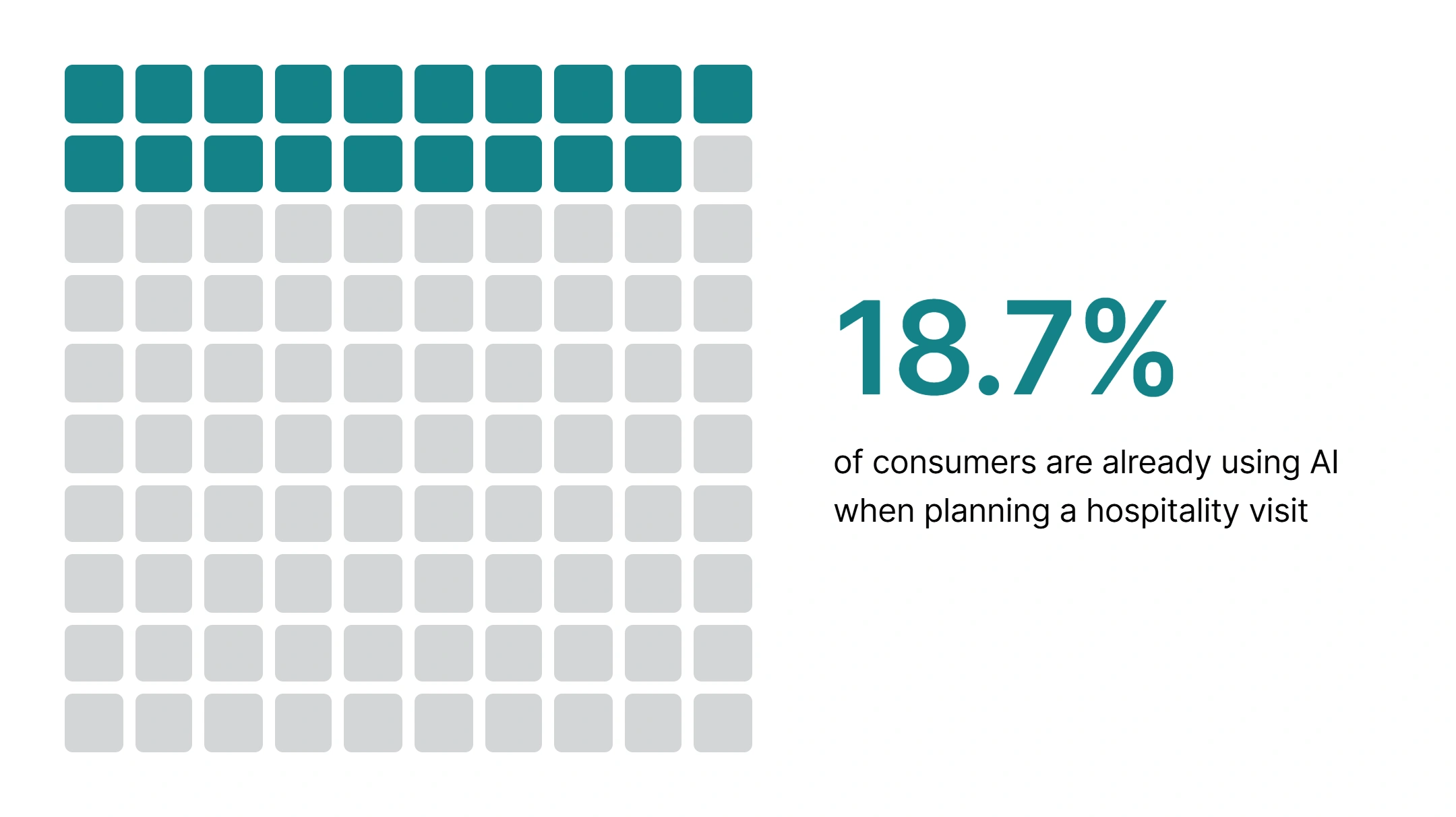
Of consumers surveyed, roughly 1 in 5 are already using AI tools when searching for pubs, bars, and restaurants to visit.
-

Research
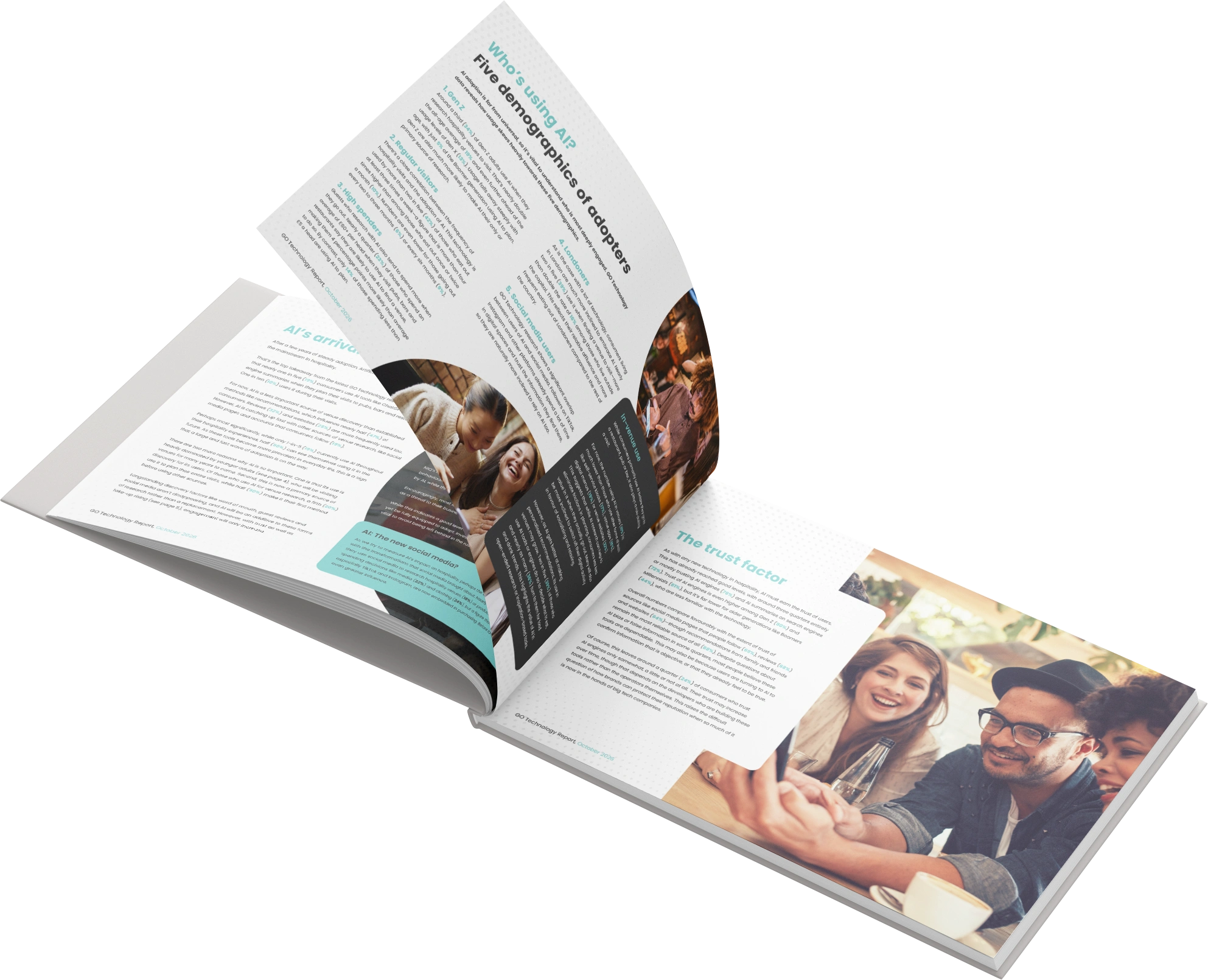
GO Technology: AI and the Algorithm: How tech is shaping venue discovery

A new report reveals that 19% of all consumers are already using AI tools, such as ChatGPT or search engine summaries, to plan their visit to a hospitality venue. Half (50%) are considering adopting AI tools into their decision-making process.
The findings are published in the latest GO Technology report from leading hospitality tech provider Zonal, in partnership with NIQ, which surveyed over 5,000 British consumers.
The research asked consumers what they use AI tools for ahead of visiting a hospitality venue, and of those already using AI tools:
The report also shows that that those who are more trusting of AI tend to be willing to visit more frequently, and spend more when they do, making them valuable hospitality customers.
For example, when looking at consumers who typically eat out more than three times a week, 42% are more likely to use AI than those who ago out once or twice a week. Similarly, guests who also typically spend over £60 (23%) when they go out are more likely to use AI tools compared to those who would spend less than £5 (14%). AI is beginning to find its place within the hospitality industry and the report findings have identified the key demographics who are the most deeply engaged with AI tools when figuring out where they want to visit.
Perhaps unsurprisingly, over a third (34%) of Gen Z are using AI tools to research hospitality venues, nearly double the all-age average of 19% and, as is the case with a lot of technology, consumers living in London are more likely to embrace AI. Some 40% of consumers in the capital use it when finding a venue to visit, more than double of those who live elsewhere (16%).
The report also reveals that around three quarters entirely or mostly trust AI engines (76%) and AI summaries on search engines (72%) when using it to find a bar, pub, or restaurant to visit, demonstrating how consumers are gaining confidence in AI tools for such purposes. However, while AI is gaining momentum as an emerging discovery tool, more established sources remain the primary ways consumers decide where to visit. Recommendations from friends and family (47%), online reviews (32%) and venue websites (25%) are still used by a greater proportion of consumers than AI (19%).
Tim Chapman, Chief Commercial Officer, Zonal, commented: “AI is rapidly becoming part of the customer journey. Consumers are moving beyond traditional search methods and are increasingly using AI to make more confident decisions about where to visit. It provides an easy way to find out different information in one place.
“This shift presents a significant opportunity for operators to understand how customers are engaging with AI, and how to use it to enhance visibility of their venue. The businesses that embrace AI tools early recognise the transformative impact AI is having on venue discovery are likely will be best placed to be the ones to capture the attention of those who are visiting more frequently and spending more, reflecting that AI users are more valuable hospitality customers.”
Karl Chessell, Director – Hospitality Operators and Food, EMEA, NIQ, added: “Consumers have a huge range of technology at their disposal in hospitality, but AI-powered solutions might become their most powerful tools of all. While sources like review platforms and social media have their roles, many people view AI research as the ultimate all-rounder—a one-stop-shop for all the information they need when planning a visit.
If these tools make it easier for consumers to discover pubs, bars and restaurants, AI can be a positive development. But it brings with it some major challenges, including of how to ensure that outputs deliver accurate information, prioritise the right things and protect the reputation of the brand. AI is going to be a critical battleground for hospitality in the months and years to come, and businesses need to quickly understand how to win there.”
For more information, images, or to arrange an interview with Zonal, please contact Fleet Street Communications via zonal@fleetstreetagency.com
About Zonal
Zonal is the UK’s leading hospitality technology provider, trusted by the country’s largest pub, restaurant and hotel operators. With 45 years of UK hospitality expertise, a fully connected technology ecosystem and always-on, human-led support, Zonal gives complex, multi-site operators the clarity, control and confidence to run every site at its best.

AI is becoming a genuine new frontier in how guests choose where to eat and drink. From searching for basic venue information, to the latest deals and discounts, one in five consumers already use AI tools like ChatGPT to plan a visit to a pub, bar or restaurant. For many of those guests, AI has become their main way of researching where to go. However, this behaviour shift isn’t happening evenly. Some groups of guests are embracing AI far faster than others, with usage and trust seeing significant differences.
So which groups are leading this shift, and how far could it go? How does trust in AI really compare to the sources guests have always leaned on? And what exactly are people turning to it to find out?
Research
GO Technology: AI and the Algorithm: How tech is shaping venue discovery
Research
GO Technology: Game On – How Hospitality Can Win at the World Cup
Research
GO Technology: People vs Tech in 2026
Research
GO Technology: Consumers and hospitality: What 2025 habits reveal about the year ahead
Research
GO Technology: The new age of pub service

Research
GO Technology: The social value of hospitality
Research
GO Technology: More Than a Meal

Research
GO Technology: Why 6:12pm is the new 8pm
Sunday accounted for 43% of all Bank Holiday weekend hospitality bookings, while demand between 12pm and 5pm saw the strongest growth year-on-year.
New insight from leading hospitality technology provider Zonal reveals that Sunday firmly established itself as the most popular day of the recent Bank Holiday weekend, accounting for 43% of all bookings made across the three-day period.
While traditional lunch and dinner times remained the busiest booking windows overall, the strongest growth was seen between midday and 5pm. Bookings at 4pm rose by 14.9%, while reservations at 3pm and 12pm increased by 12.3% and 12.1%, pointing towards consumers making more of earlier bookings and daytime occasions across the long weekend. This mirrors findings from Zonal’s GO Technology research in partnership with NIQ, ‘Why 6:12pm is the new 8pm’, which revealed a growing consumer preference for earlier dining and social occasions, with bookings before 6pm continuing to gain share.
Sunday also recorded the strongest growth, with bookings increasing by 3.3% year-on-year, outperforming both Saturday (+2.6%) and Bank Holiday Monday (+0.5%), as well as the overall year-on-year uplift of 2.3% for the whole weekend. The figures suggest that Sunday played a central role during this bank holiday weekend, providing an important trading opportunity for hospitality businesses.
Alongside this shift, consumers appeared slightly more spontaneous in their planning. On average, guests booked 3.5 days in advance compared to 3.8 days last year. Bank Holiday Monday bookings were made closest to the occasion, with guests reserving tables just 2.5 days ahead on average.
Tim Chapman, Chief Commercial Officer, Zonal, commented: “Bank Holiday weekends continue to provide important trading opportunities for hospitality operators. What’s particularly interesting from this data, is the role Sunday now plays. With almost half of all bookings taking place on the day, it’s increasingly becoming the focal point of the Bank Holiday weekend, supported by strong demand for daytime dining and social occasions.
“We’re also seeing consumers remain relatively flexible in their planning, booking slightly closer to the occasion than they did last year. For operators, this highlights the importance of maintaining visibility and availability right up to the weekend itself, while ensuring they’re prepared to cater for demand throughout the day, not just during the traditional evening peak.”
For more information, images, or to arrange an interview with Zonal, please contact Fleet Street Communications via zonal@fleetstreetagency.com
About Zonal
Zonal is the UK’s leading hospitality technology provider, trusted by the country’s largest pub, restaurant and hotel operators. With more than 45 years of UK hospitality expertise, a fully connected technology ecosystem and always-on, human-led support, Zonal gives complex, multi-site operators the clarity, control and confidence to run every site at its best.
Thank you for joining us at our Parallel Session at the Propel Multi Club Summer Conference today, we hope you found the topics discussed interesting!
Want a copy of this report when it’s released? Sign up here and we’ll send a copy straight to your inbox.
Complete the form below and we'll send you a copy of the report when it's released on 27/09/2026!
Of consumers surveyed, roughly 1 in 5 are already using AI tools when searching for pubs, bars, and restaurants to visit.
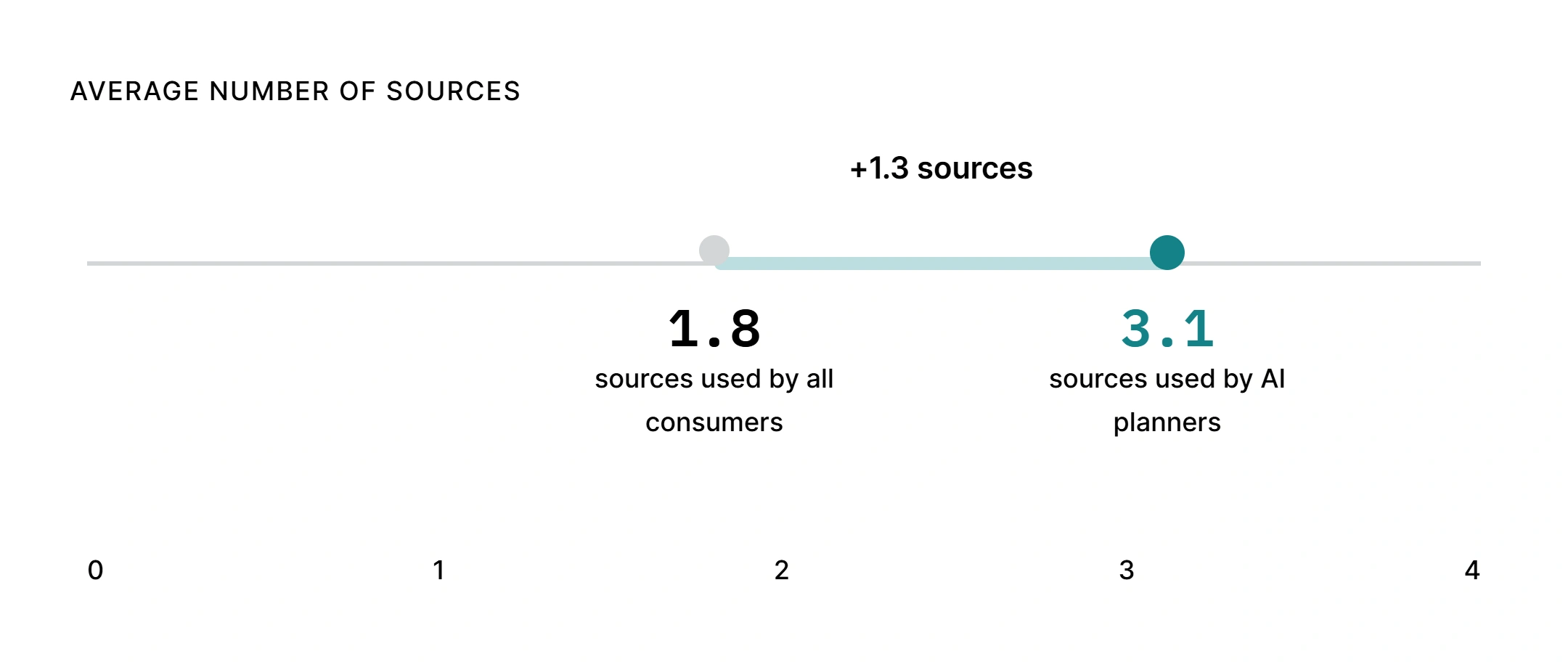
AI users consult an average of 3.1 sources of information when planning a night out, compared to an average of 1.8 across the whole sample. AI isn’t replacing the legwork, but it is democratising the research process more.
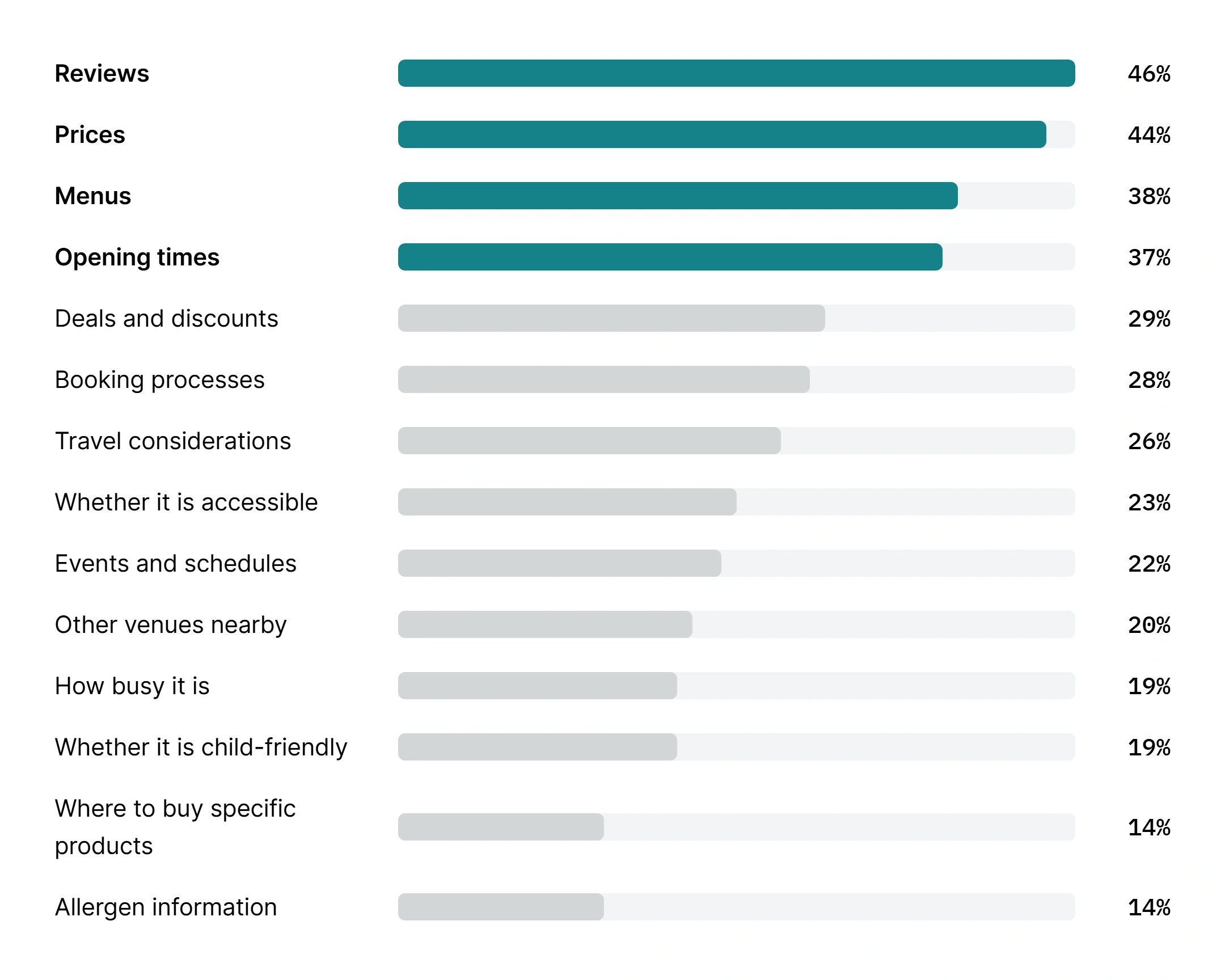
Venue information such as reviews, prices, menus, and opening times lead the way in what guests are using AI to search for, but broader information about your offering, venue vibes, and accessibility information are all in the mix too.
Research
GO Technology: AI and the Algorithm: How tech is shaping venue discovery
Research
GO Technology: Game On – How Hospitality Can Win at the World Cup
Research
GO Technology: People vs Tech in 2026
Research
GO Technology: Consumers and hospitality: What 2025 habits reveal about the year ahead
Research
GO Technology: The new age of pub service
Research
GO Technology: The social value of hospitality
Research
GO Technology: More Than a Meal
Research
GO Technology: Why 6:12pm is the new 8pm
As summer draws to a close, hospitality operators are entering one of the most important transition periods of the year. Families return to their routines, schools reopen, university students arrive in new cities, and consumer habits begin to shift from sunny beer gardens and spontaneous visits to planned social occasions and value-conscious spending.
For pubs, bars, restaurants, and quick-service venues, this seasonal change presents a valuable opportunity to reconnect with existing guests, attract new audiences, and build loyalty ahead of the busy autumn and festive trading periods.
The question is: how can businesses make the most of it?
The transition from summer to autumn often brings a change in customer priorities. Consumers become more budget-conscious, routines become more structured, and guests are increasingly looking for value-driven experiences that fit around work, education, and family commitments.
At the same time, research from Zonal highlights that loyalty, personalisation, and customer experience remain key factors influencing where guests choose to spend their money. In a challenging economic environment, brands that consistently deliver relevant offers and rewarding experiences are more likely to retain customers and increase visit frequency.
For operators, this means moving beyond blanket discounts and focusing on targeted engagement strategies that appeal to distinct customer groups.
September marks the arrival of thousands of students into towns and cities across the UK. Freshers represent more than just a short-term sales opportunity. They are potential long-term customers who may spend several years living, studying, and socialising within your catchment area.
To attract this audience:
Create Student-Friendly Promotions
Students are actively seeking value as they settle into university life. Consider:
Using Zonal’s Promotions functionality, businesses can create targeted offers that encourage trial visits while protecting margins.
“Multiple tiers could be set up to target specific societies within a university. By having unique rewards for a society, they can help build a great affiliation. This could help target specific days when they train and in return help drive trade for quieter periods – typically midweek.
An attractive sign-up offer can really go a long way to a successful launch of a loyalty program. This can either be a free item for registration or additional currency/ points. Points and Currency rewards can be delayed to the following day after sign-up. As well as delaying the reward, an expiry can be set. This helps target return footfall and spend in a short period.
A ‘points for spend’ would be a fantastic way to encourage spending in the venue. These points could be then exchanged for items or converted into currency to spend across the venue. This would give the students something tangible to aim for. Double points can be offered at specific times to drive sales in quieter times. Double point offers could also be applied to specific sites at specific times. For example, food venues on a Tuesday evening could be made available when the venue might usually be quieter.
Due to the very nature of the sales being very term time led, this can lead to items (specifically food) perishing and lead to food waste. If there is a lot of specific items left that is going out of date after the term, rewards can be created specific to these items to help sell them.”
Rather than focusing solely on acquisition, think about retention from day one.
Loyalty programmes allow operators to encourage repeat visits through points, rewards, exclusive benefits, and personalised offers. Zonal’s Loyalty platform enables businesses to track customer behaviour, reward engagement, and build a richer understanding of guest preferences.
A free birthday drink, rewards for repeat visits, or incentives for referring friends can all help turn first-time visitors into loyal advocates.
Today’s students expect frictionless experiences. Mobile ordering, digital engagement, and seamless payment experiences can significantly influence venue choice.
Making it easy for guests to book, order, pay, and receive relevant communications helps create a customer experience that matches modern expectations.
While students are settling into university life, families are returning to school routines and looking for ways to balance convenience, value, and quality time together.
Operators can appeal to this audience by:
Introducing “Back-to-Routine” Offers
Examples could include:
These promotions help drive footfall during quieter trading periods while giving families a compelling reason to choose your venue.
Making Booking Easy
As schedules become busier, convenience becomes increasingly important.
Encouraging guests to pre-book family meals, Sunday lunches, or special occasions can help secure future revenue while improving operational planning.
One of the biggest opportunities this autumn lies in making better use of customer data. Many hospitality businesses already hold valuable information about their guests, but those insights often remain underutilised.
Research from Zonal’s loyalty and consumer insight programmes continues to show that guests respond positively to relevant, personalised engagement rather than generic marketing messages.
For example, instead of promoting the same offer to everyone, businesses can tailor campaigns based on visit frequency, spend history, or customer preferences.
While discounts can drive short-term footfall, the most successful autumn campaigns focus on creating memorable experiences.
Industry research indicates that many operators plan to use seasonal promotions as a key revenue driver, recognising that consumers continue to seek experiences worth leaving home for.
The goal should be to create reasons for guests to visit that extend beyond price alone.
September is more than just the end of summer. It is the start of the run-up to the busiest trading period of the year.
By combining targeted promotions, loyalty initiatives, customer insights, and seasonal experiences, operators can position themselves for a strong final quarter.
As the seasons change, so do customer behaviours. The businesses that thrive are those that adapt quickly, understand their audiences, and use technology to deliver the right message, to the right guest, at the right time.
Whether you’re welcoming freshers, reconnecting with families, or nurturing loyal regulars, now is the perfect moment to turn seasonal change into commercial opportunity.
With the right mix of promotions, loyalty, personalisation, and guest experience, autumn could be your most successful season yet.
Research
GO Technology: AI and the Algorithm: How tech is shaping venue discovery

Blog
Five World Cup Lessons to Apply Before the Next Big Match
Blog
Two businesses under one roof: The importance of joined up F&B and accommodation for pubs with rooms
Research
GO Technology: Game On – How Hospitality Can Win at the World Cup
Blog
Tech that Powers Tips and Empowers Your Team
Blog
Pubs with Rooms: A Growth Opportunity


Guides
Whitepaper: Diversifying in the Hospitality Industry to Meet Rising Costs
Blog
Understanding Guest Loyalty in 2026

Webinars & podcasts
Beyond the Stay: How trends & tech are reshaping Holiday Parks
During the World Cup, pubs and bars faced one of the busiest trading periods of the year, with an estimated 9.3 million consumers making plans to watch the World Cup in a hospitality venue. This additional demand for a visit to the pub provided a significant opportunity for operators, so as part of our GO Technology consumer research produced in partnership with NIQ, powered by CGA intelligence, we surveyed 5,000 British consumers to find out what would get them through the door to watch the tournament, and what would keep them coming back.
With the tournament finished, and more football kicking off soon, the value now is in applying those learnings before the next big match, so businesses can be ready for the demand that live sport brings.
Make Bookings effortless
Our research found that around a third of hospitality viewers (32%) said the ability to book a table increased their likelihood of visiting a venue. For a pub estate, giving fans a way to book ahead secures demand ahead of time rather than relying on walk-ins, and allows businesses to better plan staffing and stock requirements.
But the benefits of booking systems don’t stop there. They can also help make better use of the room itself, allocating tables based on the booking rather than on a first come, first served basis, so more of the space gets used well on a busy night. Spend can move beyond the pint too: pre-paid extras, from a reserved spot by the big screen to a food and drink package, can be booked in advance, and we’ve previously seen an average 15% uplift in basket spend from guests who pre-order.
Convenience drives spending
Our research also found that 31% of guests said they’d be drawn in by the chance to order food and drinks without leaving their seat. When guests are engrossed in the game, the last thing they want is to miss a key moment while waiting at the bar.
At-table ordering lets guests order and pay digitally from their seat, with the order sent straight to the bar or kitchen screen. Making it easy for customers to order a second round or a snack, upselling extras at the right point in the ordering journey and complete a payment from their own devices helps drive incremental spend throughout the game by eliminating that potential pain point of missing a key moment. It helps on the staff side too: less time spent taking orders means more time spent on the ones already placed, so more rounds get through during a match.
Loyalty matters on match day
Loyalty schemes proved a real, if smaller, visit motivator too. 22% of consumers watching in pubs and bars said loyalty rewards were a reason to visit. A big communal occasion like this doesn’t come round often, and it’s a chance to turn one-off visitors into regulars, but only if the scheme is ready before guests arrive.
A loyalty scheme works because it gives a guest a reason to come back and use the rewards they’re already earning, rather than trying somewhere else. Match days are a natural moment to make that reason stronger, whether that’s double points or a bigger reward tied to the occasion, landing the incentive right when demand is highest. Loyalty schemes do more than encourage repeat visits too: they’re one of the best ways to gather guest data, from contact details to how often someone visits and what they order, and that data can then feed into marketing activity, such as offering early access to bookings for the next big event.
The pre-order opportunity
Just over a fifth of guests, 21%, said they’d be more likely to visit a venue if they could pre-order food or drinks. It’s a small addition that can make a real difference around a big date on the calendar: guests choose their food and drink when they book, so the kitchen has a clearer picture of what’s needed before service even starts. That takes some of the guesswork out of a busy night, and some of the spend is already in place before guests arrive. It’s worth setting the menu up in good time, so it’s ready whenever the next big occasion comes around.
Personalisation still has a place
Personalised offers were the smallest driver, at 17%, but they still matter. Every booking, order and loyalty sign-up creates a small piece of information about a guest: what they ordered, how they like to pay, how often they’ve been back. Brought together, that data can shape offers that feel relevant rather than generic, and cut out the obvious mismatches too; for example, not offering a beer discount to a cider drinker, or a burger deal to someone who only orders the veggie option. That’s the difference between a promotion sent to everyone and one that feels like it was made for the guest receiving it.
These aren’t habits that appeared for one tournament. Guests who wanted to book ahead, order from their table, and be recognised as regulars will want the same at the next big match, cup final or major sporting occasion. The operators who put these learnings into practice now will be the ones ready when it does.
To learn more about how Zonal’s connected technology could help your pub estate make the most of the opportunities live sports can bring, get in touch today.
Research
GO Technology: AI and the Algorithm: How tech is shaping venue discovery
Blog
Back to Business: Winning Guests as Summer Ends and Student Season Begins
Blog
Two businesses under one roof: The importance of joined up F&B and accommodation for pubs with rooms
Research
GO Technology: Game On – How Hospitality Can Win at the World Cup
Blog
Tech that Powers Tips and Empowers Your Team
Blog
Pubs with Rooms: A Growth Opportunity
Guides
Whitepaper: Diversifying in the Hospitality Industry to Meet Rising Costs
Blog
Understanding Guest Loyalty in 2026
Webinars & podcasts
Beyond the Stay: How trends & tech are reshaping Holiday Parks
Zonal, the UK’s leading hospitality technology provider, announces the appointment of Joel Chapman as Chief Executive Officer, effective from July 2026, ahead of its next stage of growth.
The appointment comes at a time of stability and investment for the business, which was acquired by Volaris Group, a division of Constellation Software, one of the world’s largest software firms, earlier this year. The deal brings a new permanent home and long-term backing for Zonal, heralding an exciting new era, with plans to accelerate development and further strengthen the platforms its customers depend on.
Joel has been part of Zonal since 2002 and brings more than two decades of hospitality technology experience to the role. He is a safe pair of hands for the business and for its customers, having joined the board in 2020 as Chief Customer Officer and played a central role in shaping how Zonal serves the hospitality sector.
The rest of the leadership team will remain in place, as the business continues to operate as it always has, with the same people, knowledge of the hospitality sector, values, and commitment to its customers.
Joel Chapman, CEO at Zonal, said: “I am thrilled to be appointed CEO of Zonal, a company I joined in 2002 and to which I remain deeply committed.
“As CEO, my role is to guide our future direction by listening closely to our customers and to our people, ensuring we continue to strengthen our position as the UK’s leading hospitality technology provider. With the backing of Volaris, I am looking forward to leading Zonal into this next chapter of its 45-year journey.”
Jesper Ulsted, Portfolio Leader at Volaris Group, comments: “We are delighted to appoint Joel Chapman the new CEO of Zonal. Following our acquisition of the business earlier this year, we spent time getting to know him and the team and are confident he is the person best placed to take the business forward.
“I’m especially pleased that we have been able to find such a strong candidate from within Zonal itself. It is another testament to Volaris’ dedication to developing talent and future leaders from within the businesses we acquire.
“Joel knows the business, its customers and its people inside out and he brings an experienced and steady hand to the role, as we look ahead with confidence to the future for Zonal.”
For more information, images, or to arrange an interview with Zonal, please contact Fleet Street Communications via zonal@fleetstreetagency.com
About Zonal
Zonal is the UK’s leading hospitality technology provider, trusted by the country’s largest pub, restaurant and hotel operators. With 45 years of UK hospitality expertise, a fully connected technology ecosystem and always-on, human-led support, Zonal gives complex, multi-site operators the clarity, control and confidence to run every site at its best.

Consumers are more than twice as likely to choose their local (34%) over travelling to other venues (17%)
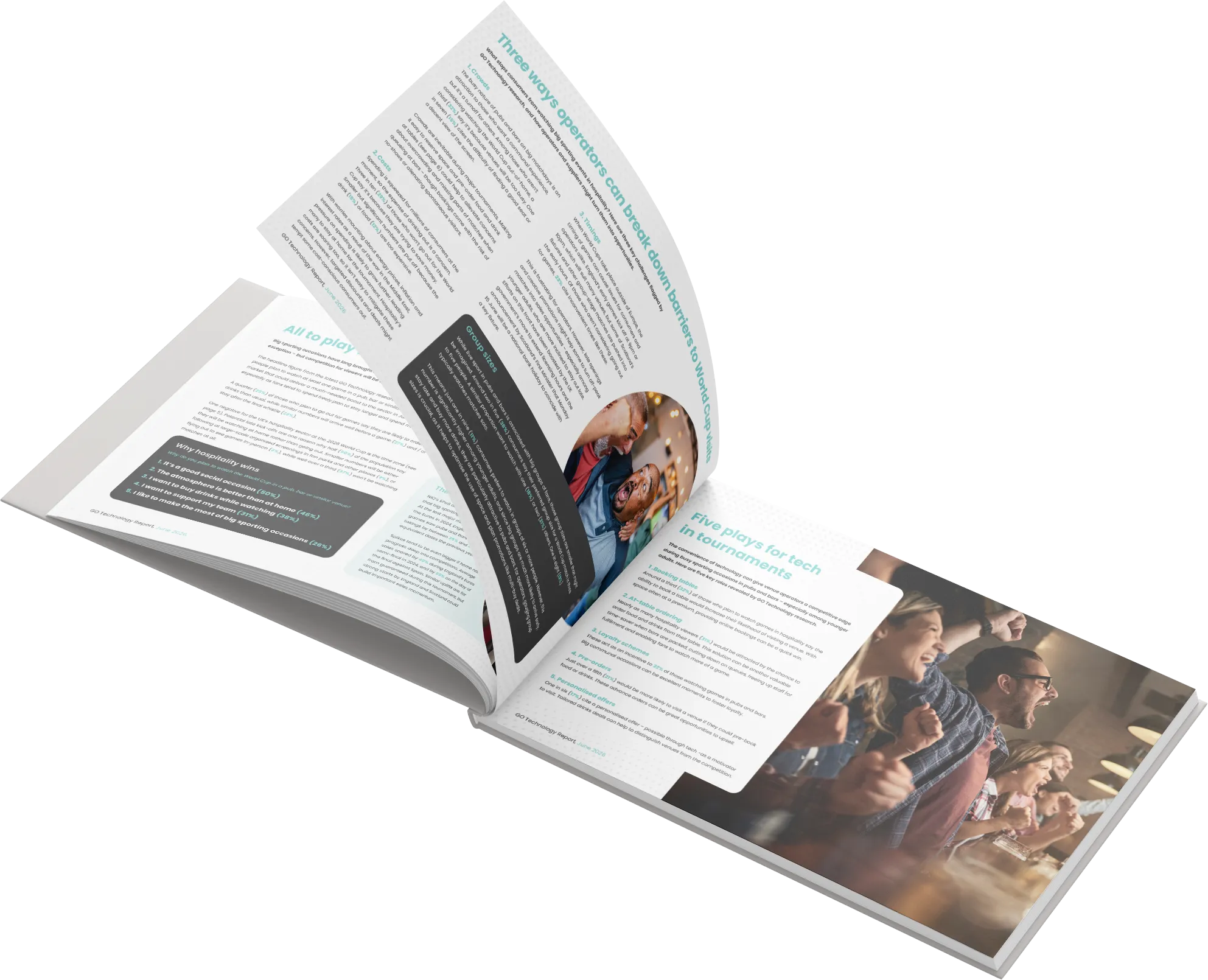
The latest GO Technology report from leading hospitality tech provider Zonal, in partnership with NIQ, shows that 34% of consumers planning to tune in to the World Cup will do so from their local pub, bar or hospitality venue, with a total of 9.3m British consumers planning to watch at least one game in a pub, bar or restaurant this summer.
The new report demonstrates also how watching sport in pubs and bars is changing, becoming a more inclusive experience, with 79% of men and 77% of women who are looking to watch the World Cup in hospitality planning to watch the final in a venue.
The survey, of over 5,000 consumers, asked what the appeal of watching the World Cup in the pub is.
Half (50%) said it’s because it will provide a good social experience.
46% said it was because the atmosphere is better than at home.
38% said it’s because they want to buy drinks while watching a game.
24% think watching in a venue is the next best thing to being in a stadium.
This highlights the size of the opportunity for operators who get it right this summer, a crucial trading period for the sector.
When those planning to watch the World Cup in a venue were asked what would encourage them to visit and improve the experience, consumers were clear with (32%) saying it was the ability to book a table in advance, (31%) saying the ability to order food and drinks to the table and, for just under a quarter (22%), it was access to loyalty schemes. The right tech systems will therefore give operators a competitive edge during busy match days and play a pivotal role in motivating consumers to visit a pub or bar during the tournament.
Tim Chapman, Chief Commercial Officer, Zonal, said: “Major sporting tournaments like the World Cup are a huge opportunity for hospitality operators. Our survey shows that people want to make the most of the atmosphere and food and drink on offer, not stand in queues waiting for tables or hanging around the bar waiting to be served. Whether it’s securing a table before arrival with a booking, or ordering food and drink direct to their tables so they don’t miss out on any of the action, operators with robust tech systems can deliver a seamless experience World Cup watchers expect.”
Karl Chessell, Director – Hospitality Operators and Food, EMEA, NIQ, adds: “World Cups can be bonanzas for hospitality operators and drinks suppliers. Businesses need to know exactly who is going out and what they want. But above all it’s vital to understand why people swap the sofa for pubs and bars. Hospitality provides a unique way to experience big occasions with others, and the challenge is to show people that this is where the best memories of landmark events like the World Cup can be made.”
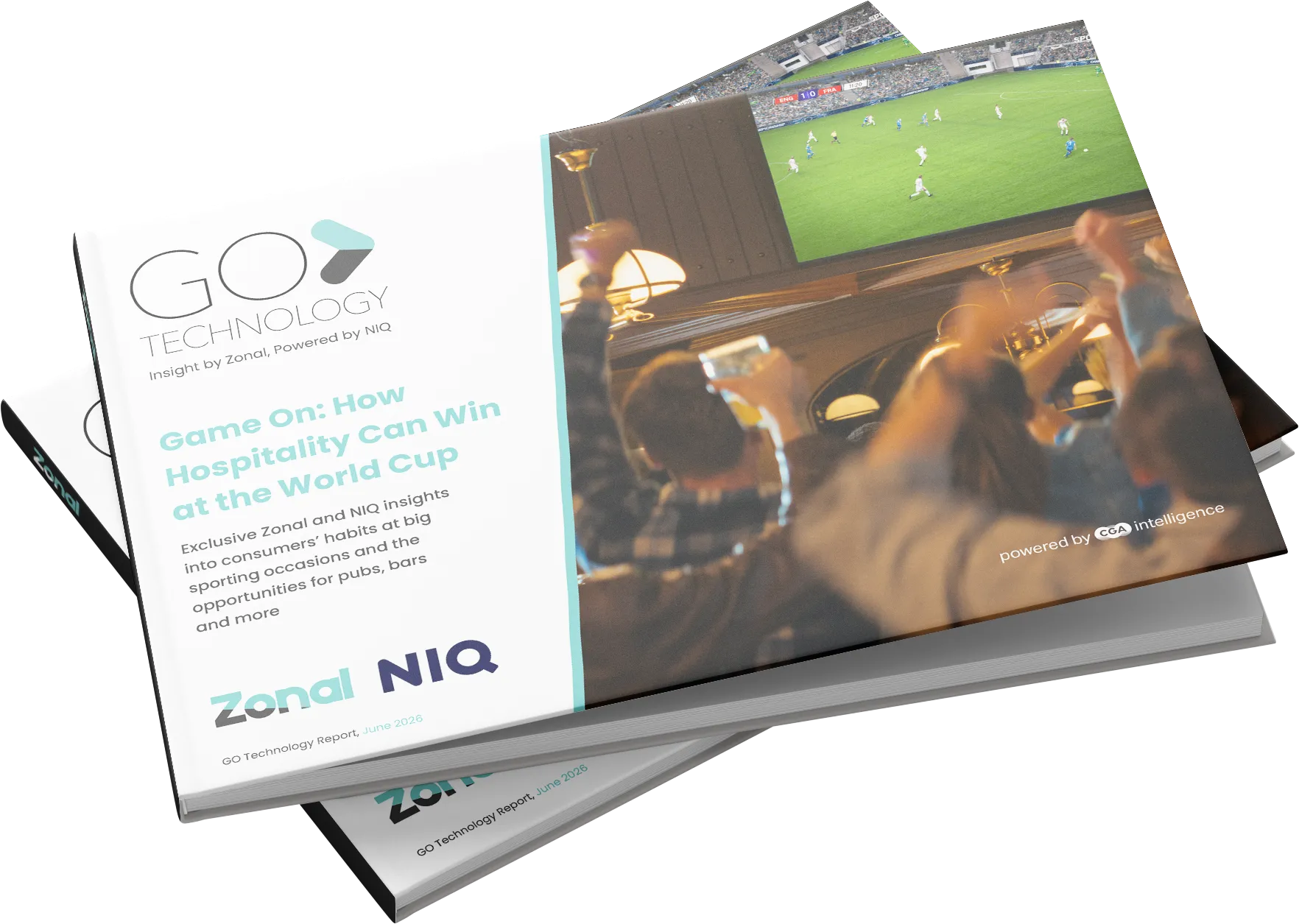
With 9.3 million British adult consumers planning to watch at least one World Cup game in a pub or bar, the tournament represents a significant opportunity for hospitality this summer. But the late kick-offs, the rising cost of going out and the comfort of home viewing mean that persuading consumers to choose to visit a venue over their sofa is far from straightforward.
For almost a quarter of consumers, watching in a hospitality venue is the next best thing to being in the stadium. With this in mind, what would make the customers more likely to visit a venue? And how can technology give operators a competitive edge on matchdays?
This exclusive research, produced in partnership with NIQ, surveyed 5,000 British consumers to find out.
Research
GO Technology: AI and the Algorithm: How tech is shaping venue discovery
Research
GO Technology: Game On – How Hospitality Can Win at the World Cup
Research
GO Technology: People vs Tech in 2026
Research
GO Technology: Consumers and hospitality: What 2025 habits reveal about the year ahead
Research
GO Technology: The new age of pub service
Research
GO Technology: The social value of hospitality
Research
GO Technology: More Than a Meal
Research
GO Technology: Why 6:12pm is the new 8pm
New insight from leading hospitality technology provider, Zonal, reveals an early surge in bookings for the first England match of the FIFA World Cup 2026, with reservations in pubs rising by +184% compared to a typical trading day.
Across the wider hospitality sector, bookings are also up significantly, increasing by +64% year-on-year.
The spike highlights how live sport continues to drive footfall, with fans choosing to secure their spot early to watch key fixtures in a social setting. This sharp uplift not only reflects the scale of national interest in England games, but also a growing behaviour shift towards pre-booking for major sporting occasions, rather than relying on walk-ins.
The trend isn’t limited to England fixtures alone. Data from the opening match of the tournament on 11th June, Mexico vs South Africa, shows a +51% uplift in overall hospitality bookings, with pubs alone seeing a +63% increase compared to the same date in 2025. This demonstrates the broader appeal of live tournament action in driving early demand across venues.
Much like other key calendar moments, the data suggests that anticipation plays a crucial role, with bookings building momentum in the days leading up to kick-off as fans plan group occasions. For operators, this creates a valuable opportunity to maximise covers, optimise staffing, and enhance the matchday experience.
Tim Chapman, Chief Commercial Officer, Zonal, commented: “Major sporting events such as the FIFA World Cup 2026 continue to be a significant driver of bookings, bringing people together and creating key trading moments for the hospitality sector.”
“With weeks still to go until the first games kick off, and demand set to increase as the event approaches, this early uplift in bookings is a welcome sign for hospitality.”
“The increase we’re seeing demonstrates how important it is for venues to plan ahead and capitalise on demand, ensuring they can deliver a great experience while maximising capacity.”